
WTTC Global Summit 2027 in India New Delhi
The World Travel & Tourism Council announced on 9 October 2026 that New Delhi will host its 27th Global Summit in 2027. Here are the reasons WTTC gave, the numbers behind them, and what India's hotels, airlines and destinations must get right in the twelve months before the world's tourism CEOs arrive.
Why Did WTTC Choose India for the 2027 Global Summit? The Short Answer
India was chosen to host the WTTC Global Summit 2027 because it is the fastest-rising large travel and tourism economy in the world. WTTC's own research puts the sector's contribution to India at US$263.6 billion in 2025, supporting 46.2 million jobs, and forecasts that India will climb from the world's 10th-largest travel and tourism economy to the 4th-largest by 2036. New Delhi won a competitive process in which 22 destinations expressed interest.
- WTTC President and CEO Gloria Guevara called India "a country with extraordinary tourism potential and a sector that is already delivering remarkable economic growth".
- WTTC cited India's scale and its growing global connectivity, and said the summit will let international businesses and investors explore partnerships in India's tourism ecosystem.
- Domestic travellers spent US$203 billion in India in 2025, 86 percent of all sector spending. The summit is partly a bid to lift the international share.
- India has hosted before. The WTTC Global Summit came to Delhi in April 2005, so 2027 will be the second time in 22 years.
- The announcement was made at the close of the 26th Global Summit in Valletta, Malta, where Union Tourism Minister Gajendra Singh Shekhawat received a WTTC Global Champion Award.
- This page also carries a delegate's guide to sightseeing in and around Delhi, from half-day visits between sessions to day trips to Agra and Jaipur, with opening days, travel times and practical notes.
- For India's hospitality industry, the summit is a deadline. The guests who decide where global tourism capital flows will judge India by the service they receive on the ground. A readiness plan is below.
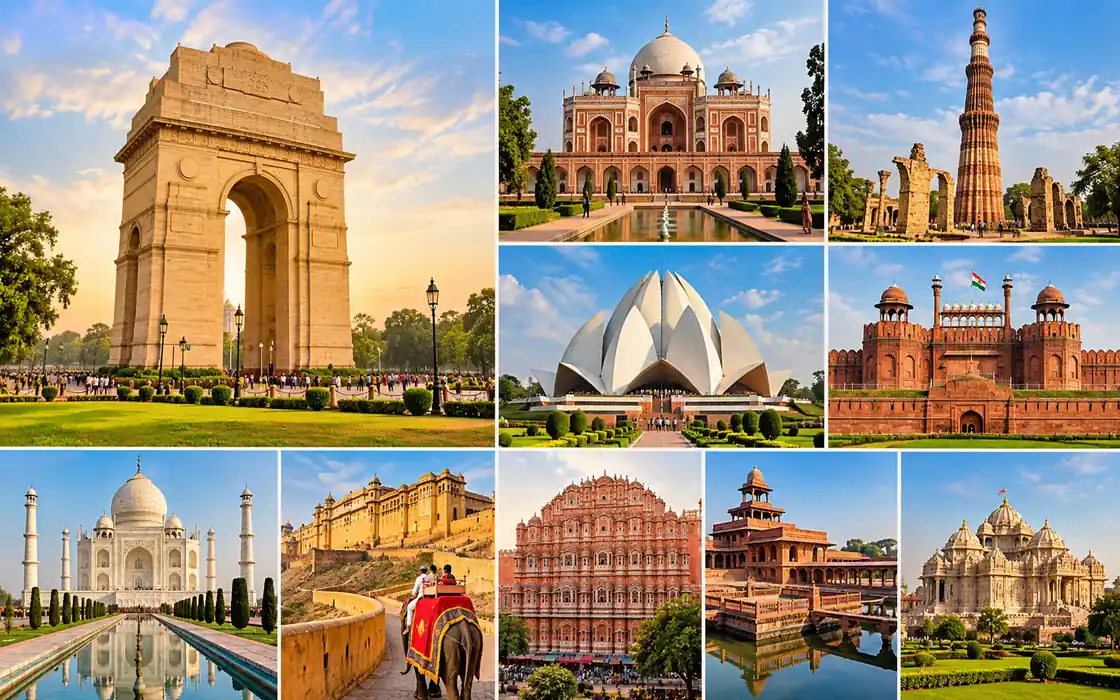
Twenty-two destinations wanted the 2027 WTTC Global Summit. India got it. For a sector that WTTC says already supports more than one in every ten jobs in the country, that decision is a vote of confidence worth understanding properly, because the reasons behind it are also the reasons the next twelve months matter.
This article sets out what WTTC said, what the numbers show, and what the summit demands of the people who will actually host it: the hotel general managers, airline crews, tour operators and front-line teams across Delhi and beyond.
Turn the Summit Into a Significant Opportunity as a Visitor
For a visiting delegate, the summit compresses years of relationship-building into three days. The chief executives, ministers and investors you would otherwise pursue across time zones will be within walking distance of one another, and India itself, a US$263.6 billion travel economy with 86 percent of its spending still domestic, has signalled that it is open to international partners.
- Meetings: secure them before you fly. The Ministry of Tourism is targeting 5,000 attendees, and the diaries that matter will be full by the time the aircraft doors open in Delhi.
- Partnerships: WTTC has framed the summit as the place for international businesses and investors to explore partnerships in India's tourism ecosystem. Arrive with a proposition precise enough to be accepted in a single meeting.
- Insight: India's domestic market is the case study of the decade. The state pavilions and side events are where a US$203 billion traveller base explains itself.
- Experience: add three nights for the Golden Triangle. The delegate guide further down this page was written for exactly that.
How NLP Sharpens Every Conversation You Have in India
- Rapport across cultures. Indian business is conducted on relationship first and paperwork second. The rapport disciplines of NLP, matching pace, language, posture and energy, compress the time it takes for a stranger to decide to trust you.
- Precise questions. A gracious "yes" in a first meeting can mean "I have heard you". The Meta Model supplies the questions that turn warmth into a named, dated next step.
- State management. Jet lag and a twelve-meeting day erode presence. Anchoring a resourceful state before each conversation is a discipline that can be learned in an afternoon and kept for a career.
- Well-formed outcomes. Decide, in specific terms, what you intend to leave Delhi with. Delegates who do this book better meetings and decline the wrong ones with grace.
A pro bono coaching session for visiting delegates. If you are travelling to India for the summit, Rajiv Sharma offers a complimentary coaching session to prepare you for it: a private conversation, online before you travel or in person in Delhi during the summit week, to define your outcomes for the three days and rehearse the meetings that matter most. It is pro bono, without fee or obligation, and places are limited to the summit period.
Reserve a Pro Bono Coaching Session Email info@NLPLimited.com
Turn the Summit Into a Significant Opportunity for Your Business
For an Indian hotel group, airline, destination management company, state tourism board or hospitality supplier, the summit is the densest concentration of global tourism capital and decision-makers that will come to India this decade. The opportunity opens long before October 2027 and, handled well, compounds for years after it.
- Buyers in the room: more than 1,200 chief executives and investors, and WTTC's declared intent to broker partnerships in India's tourism ecosystem. The organisation with a credible international proposition gets the meeting. The one with a brochure gets a handshake.
- State investment pitches: the Ministry's strategy is to present India through its states. A tourism board with a lucid investment case, and a web presence that answers what delegates ask before they ask it, will command attention in Delhi.
- Summit supply: five thousand attendees need venues, transport, hospitality, technology and events. The contracts to deliver the summit itself will be awarded during 2027.
- The inbound tail: every delegate who leaves impressed becomes a distribution channel for years. Service quality during the summit is an investment in reputation, not an operating cost.
- Hiring and benchmarking: the summit is the reason to measure your guest experience against a global standard now, and to build the team that will deliver it when the world arrives.
How NLP Limited Turns This Into a Gold Mine for Your Organisation
An opportunity of this scale is not harnessed by instinct. It is harnessed by a clear strategy, and by managers and teams who can execute it on every shift. NLP Limited works at both levels, in the boardroom and on the floor.
- Consulting on the summit strategy. Our consulting practice works with boards and leadership teams to decide which delegates to target, what proposition to put in front of them, how the twelve months before October 2027 are sequenced, and how the inbound tail is captured once the summit closes.
- Training your managers. General managers and department heads are developed to lead for consistency, to coach in the moment, to hold the standard at two in the morning and to grow the people beneath them, using the modelling disciplines on which NLP was built. This is the core of our leadership training.
- Training your teams. Front-line, sales, reservations and concierge teams are trained in rapport, sensory acuity, state management and service recovery, so that the warmth Indian hospitality is known for arrives with the precision global buyers expect. See our customer experience training.
- Selling to chief executives. Senior sales teams learn to conduct a twenty-minute conversation with a global CEO as a discovery exercise with a defined next step, rather than a presentation. Our sales training is built for exactly this calibre of buyer.
- Measuring the gain. NLP-certified mystery shoppers establish the baseline before training begins and verify the improvement before the delegates arrive, and the Licensed NLP Practitioner Programme leaves you with an in-house bench of trainers and coaches when we step back.
Discuss a Summit Strategy Business Consulting Train Your Managers
What Is the WTTC Global Summit?
The WTTC Global Summit is the annual gathering of the World Travel & Tourism Council, the London-based body that represents the private sector of travel and tourism worldwide. The summit brings together the chief executives of the largest hotel, airline, cruise and travel companies with tourism ministers and investors for three days of policy and deal-making. The 26th Global Summit took place in Valletta, Malta, from 7 to 9 October 2026, with more than 1,000 delegates, and India's 27th Global Summit in 2027 is expected to be larger still.
WTTC Global Summit 2027 at a Glance
| Host | New Delhi, India |
|---|---|
| Edition | 27th WTTC Global Summit |
| Timing | 2027; the Ministry of Tourism has indicated October as the tentative month. Exact dates and venue not yet announced. |
| Announced | 9 October 2026, at the closing of the 26th Global Summit in Valletta, Malta |
| Announced by | Manfredi Lefebvre d'Ovidio, Chairman, WTTC, and Gloria Guevara, President and CEO, WTTC |
| Selection | Competitive process; 22 destinations expressed interest, according to WTTC |
| Expected scale | More than 1,200 global CEOs, ministers and investors; the Ministry of Tourism is targeting 5,000 attendees overall |
| India's previous summit | April 2005, Ashoka Hotel, New Delhi, inaugurated by President A.P.J. Abdul Kalam |
| Indian delegation in Malta | Gajendra Singh Shekhawat, Union Minister of Tourism and Culture (received a WTTC Global Champion Award), with Suman Billa of the Ministry of Tourism |
Why Did WTTC Choose India? Five Reasons
WTTC's press release and the statements made in Malta point to five reasons, four of them economic and one about India's record as a host.
1India's travel and tourism economy is already among the world's largest
WTTC's research puts travel and tourism's contribution to India's economy at US$263.6 billion in 2025, up 7.3 percent on the previous year, with 46.2 million jobs supported, which is more than one in every ten jobs in the country. Few host countries can offer WTTC's members a market of that size.
2India is on course to become the world's fourth-largest tourism economy
WTTC forecasts that India's sector will grow 8.5 percent in 2026 to US$286.1 billion, supporting 48.1 million jobs, and will nearly double to US$527 billion by 2036. On that trajectory India moves from the world's 10th-largest travel and tourism economy to the 4th-largest. WTTC chairman Manfredi Lefebvre d'Ovidio said the council was "delighted to bring the world's most important Travel & Tourism event to India in 2027".
3Domestic demand is enormous, and the international upside is the prize
Indian travellers spent US$203 billion inside India in 2025, which WTTC says is 86 percent of all sector spending. That domestic base is what makes the growth forecasts credible. The remaining 14 percent is the opportunity: WTTC said the summit will help India "capture more international travel demand", and Gloria Guevara spoke of showcasing India to WTTC's global membership and strengthening public-private partnerships.
4Scale and growing global connectivity
WTTC described India as a natural host because of its scale and its growing global connectivity. Indian trade coverage of the announcement added two further points: digital innovation through UPI and the pace of infrastructure growth. Minister Shekhawat said the win follows India's hosting of the G20 and BRICS summits and will position the country as a leading South Asian host for large global events.
5India has done this before, and bid hard to do it again
India hosted the WTTC Global Summit in New Delhi in April 2005, inaugurated by President A.P.J. Abdul Kalam. For 2027 the Ministry of Tourism led a bid that beat 21 other interested destinations. Suman Billa of the Ministry said the strategy is to position India as a viable investment destination by engaging the states, and set a target of at least 5,000 attendees.
What WTTC and the Indian Government Said
- "India is a country with extraordinary tourism potential and a sector that is already delivering remarkable economic growth."Gloria Guevara, President and CEO, World Travel & Tourism Council, 9 October 2026
- WTTC is "delighted to bring the world's most important Travel & Tourism event to India in 2027".Manfredi Lefebvre d'Ovidio, Chairman, World Travel & Tourism Council, 9 October 2026
- "This will be a big win for India, and instrumental in promoting inbound tourism in a big way."Gajendra Singh Shekhawat, Union Minister of Tourism and Culture, Government of India, as reported by TravelBiz Monitor
- "India offers the world an experience that is both timeless and also constantly evolving."Gajendra Singh Shekhawat, as reported by Travel Trends Today
India's Travel and Tourism Economy by the Numbers
These are WTTC's figures for India, published with the 9 October 2026 announcement. They are the numbers the summit will be built around, and the ones worth quoting when the question of why India comes up.
Source for all figures: WTTC, "India Selected to Host WTTC Global Summit 2027", 9 October 2026.
What the 2027 Summit Means for India
- Investment attention The summit puts more than 1,200 chief executives and investors in one city for three days. WTTC said explicitly that it will give international businesses and investors a chance to explore partnerships in India's tourism ecosystem. Hotel pipelines, airport concessions, destination marketing contracts and airline partnerships get decided in rooms like these.
- A platform for the states The Ministry of Tourism's stated strategy is to position India as an investment destination by engaging the states. Expect Rajasthan, Kerala, Goa, Gujarat, Uttar Pradesh and others to compete for delegate attention in Delhi.
- An inbound tourism push With 86 percent of spending domestic, India's upside is international. Minister Shekhawat called the summit "instrumental in promoting inbound tourism in a big way". Every delegate who leaves impressed is a distribution channel.
- A twelve-month deadline The tentative month is October 2027. That is one year to prepare the airports, hotels, restaurants and tour operators of Delhi and the main circuits for the most demanding guests the industry has: the people who run it.
Sightseeing Near Delhi for WTTC Global Summit 2027 Delegates
New Delhi is one of the few summit host cities where a delegate can see three UNESCO World Heritage Sites between a morning session and dinner, and reach the Taj Mahal before lunch the next day. This guide is organised by the time a delegate actually has: a few hours inside Delhi, a full day out of the city, or three days for the Golden Triangle. Travel times are typical and assume a hired car with driver, which is the usual way to do day trips from Delhi.
Inside Delhi: Half-Day Visits Between Sessions
| Place | What it is | Time needed | Good to know |
|---|---|---|---|
| Qutub Minar | UNESCO World Heritage Site. A 73-metre sandstone minaret begun in 1199, inside a complex of early Delhi Sultanate ruins in Mehrauli. | 1.5 to 2 hours | Open daily, sunrise to sunset. Combine with Mehrauli Archaeological Park next door. |
| Humayun's Tomb | UNESCO World Heritage Site. The 1570 Mughal garden tomb whose design led to the Taj Mahal. | 1.5 to 2 hours | Open daily. Sunder Nursery, a restored 16th-century heritage garden, is beside it and good for a quiet lunch. |
| Red Fort, Jama Masjid and Chandni Chowk | UNESCO World Heritage Site. Shah Jahan's 1648 fort, India's largest mosque beside it, and the oldest market street in the city. | 2.5 to 3 hours | Red Fort is closed on Mondays. Cover shoulders and knees at Jama Masjid; a cycle-rickshaw through Chandni Chowk is the easiest way to see it. |
| India Gate and Kartavya Path | The 1931 war memorial at the heart of Lutyens' Delhi, with the ceremonial avenue running up to Rashtrapati Bhavan. | 1 hour | Best at dusk. Free, open all hours. Rashtrapati Bhavan tours need advance online booking. |
| Lotus Temple | The Bahá'í House of Worship, opened in 1986 and shaped like a lotus flower, open to people of all faiths. | 1 hour | Closed on Mondays. Silence is kept inside. |
| Akshardham | A vast Hindu temple complex opened in 2005, with an evening water and light show. | 2.5 to 3 hours | Closed on Mondays. Phones, cameras, bags and other electronics are not allowed inside; lockers are provided. |
| Lodhi Garden | Ninety acres of lawns around 15th and 16th-century tombs, where Delhi walks in the morning. | 1 hour | Free and open daily. Khan Market, for shopping and dinner, is a short drive away. |
| Hauz Khas Village | A 14th-century reservoir and madrasa ruins beside a deer park, ringed by cafes, bars, galleries and boutiques. | 2 hours | Go in the late afternoon for the ruins and stay for dinner. |
| Agrasen ki Baoli | A 14th-century stepwell hidden a few minutes from Connaught Place. | 30 minutes | Free. Fits between meetings in central Delhi. |
| Gandhi Smriti and Raj Ghat | The house where Mahatma Gandhi spent his last days, and his memorial on the banks of the Yamuna. | 1.5 hours | Gandhi Smriti is closed on Mondays; Raj Ghat is open daily. |
| Dilli Haat, INA | An open-air bazaar of crafts and regional food stalls from every Indian state. | 1.5 hours | Small entry fee. The easiest place to buy gifts in one stop. |
Day Trips From Delhi by Road or Rail
| Destination | From Delhi | Why go | Good to know |
|---|---|---|---|
| Agra: Taj Mahal and Agra Fort | About 230 km. 3.5 to 4 hours by car on the Yamuna Expressway; about 100 minutes on the Gatimaan Express from Hazrat Nizamuddin to Agra Cantt. | Two UNESCO World Heritage Sites in one city: the Taj Mahal and Agra Fort, plus the Itimad-ud-Daulah tomb and the sunset view of the Taj from Mehtab Bagh across the river. | The Taj Mahal is closed on Fridays. Sunrise entry is the best experience of the day. Book tickets online in advance. |
| Fatehpur Sikri | About 40 km west of Agra; add 2 to 3 hours to an Agra day. | UNESCO World Heritage Site. Emperor Akbar's red sandstone capital, built from 1571 and abandoned within two decades, with the Buland Darwaza gateway. | Easiest as part of an Agra overnight or on the road from Agra to Jaipur. |
| Jaipur | About 270 km. 5 hours by car; about 4.5 hours by Shatabdi or Vande Bharat train. | A UNESCO World Heritage City. Amber Fort, Hawa Mahal, the City Palace and the Jantar Mantar observatory, itself a UNESCO site. | Possible as a very long day; far better with one night. Flights take under an hour. |
| Mathura and Vrindavan | About 180 km, roughly 3 hours by car, on the way to Agra. | The birthplace of Krishna and the temple town beside it, including Banke Bihari and the modern Prem Mandir. | Evening aarti is the highlight. Expect crowds on festival days. |
| Neemrana Fort Palace | About 120 km, roughly 2.5 hours by car. | A 15th-century hill fort restored as a heritage hotel, with terraces, pools, gardens and a zipline. | Good for a long lunch or one night; a gentle introduction to Rajasthan. |
| Sultanpur National Park | About 50 km from central Delhi, near Gurugram, under 1.5 hours by car. | A wetland bird sanctuary; resident species in October, with migratory birds arriving from November. | Closed on Tuesdays. Go early. |
| Keoladeo National Park, Bharatpur | About 190 km, roughly 4 hours by car; close to Agra and on the Agra to Jaipur road. | UNESCO World Heritage Site and one of Asia's great bird reserves, explored by bicycle or cycle-rickshaw. | Best combined with an Agra or Jaipur trip. |
| Chandigarh | About 250 km. Around 3.5 hours by Shatabdi train; 5 hours by car. | Le Corbusier's planned city: the Capitol Complex (a UNESCO site), the Rock Garden, the Rose Garden and Sukhna Lake. | A full day by train is comfortable. |
| Haridwar and Rishikesh | About 220 to 240 km. 5 to 6 hours by car; around 4 hours by train to Haridwar. | The Ganga aarti at Har Ki Pauri in Haridwar, and the yoga and rafting town of Rishikesh in the Himalayan foothills. | Needs one night to be worth it. |
| Amritsar | About 450 km. A flight of around 1 hour 15 minutes; about 6 hours by Shatabdi train. | The Golden Temple, Jallianwala Bagh, the old city's food lanes and the evening flag-lowering ceremony at the Attari-Wagah border. | One night minimum. Cover your head at the Golden Temple; scarves are provided. |
| Jim Corbett National Park | About 250 km, 5 to 6 hours by car. | India's oldest national park and a tiger reserve in the Himalayan foothills. | Safari zones reopen in stages from mid-October after the monsoon; check zone dates and book safaris in advance. Two nights recommended. |
With Three Days: The Golden Triangle
The Golden Triangle is the classic first-visit circuit of Delhi, Agra and Jaipur, roughly 230 km on each side. The usual order is Delhi to Agra on day one (Taj Mahal at sunrise on day two), Agra to Jaipur via Fatehpur Sikri on day two, Jaipur on day three, and a drive or flight back to Delhi. Delegates extending their stay after the summit by three nights can do the whole circuit with a car and driver, or by train and a short flight.
Practical Notes for Summit Delegates
- Weather in October: post-monsoon and mostly dry, with warm afternoons around 30 to 33°C and pleasant mornings and evenings around 18 to 22°C. Air quality in Delhi can deteriorate from late October; plan outdoor sightseeing for the mornings.
- Festivals: Diwali falls in late October or early November. Check the 2027 date, since the days around it bring heavy crowds in Old Delhi, Mathura, Vrindavan and Jaipur, and some closures.
- Closures: the Taj Mahal is closed on Fridays. Red Fort, Lotus Temple, Akshardham and Gandhi Smriti are closed on Mondays. Sultanpur National Park is closed on Tuesdays.
- Tickets: Archaeological Survey of India monuments, including the Taj Mahal, Qutub Minar, Humayun's Tomb and Red Fort, sell tickets online, with separate pricing for foreign nationals. Book the Taj Mahal and Rashtrapati Bhavan in advance.
- Visas: India's e-Visa scheme covers tourism and business for most nationalities. Apply well ahead and check eligibility for your passport.
- Getting around: Delhi Metro, including the Airport Express line, is clean and fast. App-based taxis work well in the city. For day trips, hire a car with a driver through your hotel.
- Payments: UPI is accepted almost everywhere, from monuments to street stalls. Foreign visitors can use the UPI One World prepaid wallet, available at major airports, or carry some cash for small purchases.
- Etiquette: shoes come off at places of worship of every faith. Cover shoulders and knees at religious sites, and cover your head at Jama Masjid and the Golden Temple.
Every visit on these lists is a chain of front-line service moments: the concierge who books it, the driver, the guide at the Taj Mahal, the waiter at lunch in Jaipur. That is what the next section is about.
The Test India Must Pass Before October 2027: Service at the Front Line
A summit is won on the strength of a bid and remembered on the strength of a thousand small service moments. The delegates coming to New Delhi run the world's largest hotel groups, airlines and travel companies. They will not be reading India's tourism statistics while they are here. They will be forming an opinion at immigration, at the hotel front desk, in the taxi, at dinner and on the day trip to Agra, and that opinion travels home with them.
In my experience of training hospitality teams across India, the UAE and Nigeria, the gap between a country's tourism ambition and its visitor's experience is almost never a gap in warmth. Indian hospitality has warmth to spare. The gap is in consistency: the difference between the best front-desk agent in a hotel and the one on duty at 2 a.m., between a tour guide who reads the guest and one who recites the script.
WTTC's forecast of 48 million tourism jobs in India next year is really a forecast of 48 million people whose daily behaviour decides whether the US$527 billion ever arrives. Rajiv Sharma, Founder and Director, NLP Limited
The summit is therefore a capability deadline as much as a logistics deadline, which is why the readiness plan below is about people before venues.
A Twelve-Month Readiness Plan for Hotels, Airlines and Destinations
Six moves, in the order we recommend them to hospitality clients. Each one is something a general manager, a state tourism board or an airline station head can start this quarter.
1. Measure the guest experience before you try to improve it
Most hotels and airports in India have never been assessed the way a WTTC delegate will assess them. Mystery shopping with NLP-certified evaluators gives a general manager a scored, moment-by-moment record of what a guest actually experiences from booking to check-out, and a baseline to improve against before the summit, not after.
2. Train the front line in customer experience, not just procedure
Procedure training tells staff what to do. Customer experience training teaches them to read the guest in front of them, recover a bad moment and leave an impression that gets repeated at a conference dinner in London. For summit-facing properties, that is the training that pays.
3. Turn hospitality sales teams into partnership teams
The summit is a selling opportunity for every Indian hotel group, DMC and airline, but the buyers in the room are chief executives, not procurement managers. Sales training built for senior, relationship-led selling prepares teams to hold a credible conversation about partnership, not just rate cards.
4. Develop the general managers and station heads who set the standard
Service consistency is a leadership outcome. Properties where the general manager walks the floor, coaches in the moment and holds a standard at 2 a.m. feel different to guests. Leadership training for hospitality leaders, and executive coaching for the heads of summit-critical operations, is where consistency is built.
5. Fast-track the next generation
Hotels and airlines will hire ahead of the summit, and new recruits will be on shift when delegates arrive. A structured graduate and management trainee programme, with emotional intelligence built in from the first week, shortens the time it takes a new hire to serve at a world-class standard.
6. Give state tourism boards a strategy and a digital presence the delegates will find
The Ministry's plan is to position India through its states. A state tourism board with a clear investment proposition, and a web presence that answers the questions delegates will type into a search engine or an AI assistant before they fly, will get meetings in Delhi. That is business consulting and digital marketing work, and it takes months, not weeks.
Get Your Teams Summit-Ready Before October 2027
NLP Limited trains hospitality, airline and tourism teams across India, the UAE and Nigeria in customer experience, sales, leadership and emotional intelligence, and runs NLP-certified mystery shopping programmes. Talk to Rajiv Sharma about a readiness plan for your property, airline or state.
NLP Limited Programmes for Hospitality and Tourism
Customer Experience and Customer Service Training
For hotels, airlines, airports and tour operators. Service recovery and the consistency that turns warmth into a world-class standard.
Mystery Shopping
NLP-certified evaluators score the real guest journey and give management a baseline to improve against.
Sales Training
Relationship-led selling for hotel groups, DMCs and airlines preparing to meet global buyers.
Leadership Training
For general managers and department heads who set the service standard on every shift.
Graduate and Management Trainee Programmes
Structured onboarding that gets new hires to a guest-ready standard faster.
NLP Course
Rapport, state management, reframing and precise communication: the skills under every great guest interaction.
Business Consulting
Strategy and investment positioning for tourism boards and hospitality groups.
Related Reading
- Navi Pillay: Why She Won the 2026 Nobel Peace Prize and What Leaders Can Learn From Her
- Ratan Tata: Leadership Style, Qualities, Legacy and Life Story
- Sheikh Zayed: Leadership Style and Qualities
Frequently Asked Questions About the WTTC Global Summit 2027 in India
Why was India chosen to host the WTTC Global Summit 2027?
India was chosen to host the WTTC Global Summit 2027 because of the size and growth of its travel and tourism economy. WTTC values the sector at US$263.6 billion in 2025 with 46.2 million jobs, forecasts US$527 billion by 2036, and expects India to become the world's fourth-largest tourism economy. New Delhi won a process in which 22 destinations expressed interest.
When and where is the WTTC Global Summit 2027?
The WTTC Global Summit 2027 will be held in New Delhi, India. WTTC has confirmed the city and the year but not the exact dates or venue. India's Ministry of Tourism has indicated October 2027 as the tentative month for the three-day event. This page will be updated when WTTC publishes the confirmed dates.
What is the WTTC Global Summit?
The WTTC Global Summit is the annual meeting of the World Travel & Tourism Council, which represents the global private sector of travel and tourism. It gathers the industry's chief executives with tourism ministers and investors for three days. The 26th summit was held in Valletta, Malta, in October 2026; the 27th will be in New Delhi in 2027.
Has India hosted the WTTC Global Summit before?
Yes. India hosted the WTTC Global Summit once before, in New Delhi in April 2005, at the Ashoka Hotel, inaugurated by President A.P.J. Abdul Kalam. The 2027 summit will therefore be India's second, 22 years after the first, and will be the 27th edition of the event overall.
Who announced that India will host the WTTC Global Summit 2027?
WTTC Chairman Manfredi Lefebvre d'Ovidio and WTTC President and CEO Gloria Guevara announced India as host of the 2027 Global Summit on 9 October 2026, at the closing of the 26th Global Summit in Valletta, Malta. India's Union Minister of Tourism and Culture, Gajendra Singh Shekhawat, led the Indian delegation and received a WTTC Global Champion Award.
How many destinations bid to host the WTTC Global Summit 2027?
According to WTTC, 22 destinations expressed interest in hosting the 2027 Global Summit, and India was selected after what WTTC called a highly competitive process. Some trade reports put the number of competing propositions at 20 or 21; WTTC's own press release gives the figure of 22.
Who leads the World Travel & Tourism Council?
The World Travel & Tourism Council is led by Gloria Guevara, its President and Chief Executive, and chaired by Manfredi Lefebvre d'Ovidio, as at the October 2026 announcement. WTTC is headquartered in London and represents the global private sector of travel and tourism, with members drawn from the leaders of the world's largest travel companies.
How can I attend the WTTC Global Summit 2027?
WTTC's Global Summit is primarily an invitation-based event for WTTC Members, government leaders, invited guests and accredited media. Registration details for New Delhi 2027 have not yet been published and will appear on wttc.org. India's Ministry of Tourism, which led the bid, has said it is targeting at least 5,000 attendees, which suggests an Indian programme well beyond WTTC's core membership.
What was the theme of the 2026 WTTC Global Summit in Malta?
The 26th WTTC Global Summit, held in Valletta, Malta, from 7 to 9 October 2026, ran under the theme FUTU[RE]SET and set a goal of supporting one million tourism small and medium enterprises. More than 1,000 delegates attended, including over 200 chief executives. WTTC has not yet announced a theme for the 2027 summit in New Delhi.
How big is India's travel and tourism economy?
India's travel and tourism sector contributed US$263.6 billion to the economy in 2025, according to WTTC, and supported 46.2 million jobs, more than one in every ten jobs in the country. WTTC forecasts US$286.1 billion and 48.1 million jobs in 2026, and US$527 billion by 2036, when India is expected to rank fourth in the world.
How much do domestic travellers spend in India?
Domestic travellers spent US$203 billion in India in 2025, according to WTTC, which is 86 percent of all travel and tourism spending in the country. The remaining 14 percent comes from international visitors, and WTTC said the 2027 Global Summit is intended to help India capture a larger share of international travel demand.
What did Gajendra Singh Shekhawat say about the WTTC Global Summit 2027?
Union Tourism Minister Gajendra Singh Shekhawat said the decision "will be a big win for India, and instrumental in promoting inbound tourism in a big way", and that "India offers the world an experience that is both timeless and also constantly evolving". He added that the win follows India's hosting of the G20 and BRICS summits.
How should Indian hotels and airlines prepare for the WTTC Global Summit 2027?
Indian hotels and airlines should treat the WTTC Global Summit 2027 as a twelve-month capability deadline: measure the current guest experience through mystery shopping, train front-line teams in customer experience rather than procedure alone, prepare sales teams for relationship-led conversations with global CEOs, develop general managers who hold the standard on every shift, and fast-track new recruits.
How does NLP help businesses prepare for the WTTC Global Summit 2027?
NLP, or Neuro-Linguistic Programming, gives hospitality and tourism teams practical tools for the summit: rapport skills for relationship-first selling to global buyers, the Meta Model for precise discovery conversations, state management so front-line staff stay composed under pressure, and reframing for service recovery. NLP Limited teaches these through its NLP course, its Licensed NLP Practitioner Programme and its customer experience training.
What are the best places to see near Delhi during the WTTC Global Summit 2027?
Delegates with half a day can see Qutub Minar, Humayun's Tomb, Red Fort, India Gate and the Lotus Temple inside Delhi. The best single day trip is Agra for the Taj Mahal, about 230 km away and around 100 minutes by Gatimaan Express. With three days, the Golden Triangle of Delhi, Agra and Jaipur is the classic circuit.
How far is the Taj Mahal from Delhi?
The Taj Mahal is in Agra, about 230 km south of New Delhi. By road on the Yamuna Expressway the drive takes about 3.5 to 4 hours, and the Gatimaan Express train from Hazrat Nizamuddin reaches Agra Cantt in about 100 minutes. The Taj Mahal is closed on Fridays, and sunrise is the best time to visit.
What is the best time to visit Delhi?
The best time to visit Delhi is from October to March, when days are warm and dry and evenings are cool. The WTTC Global Summit 2027 is tentatively planned for October, at the start of that season. April to June are very hot, July to September bring the monsoon, and air quality is often poorest from late October through December.
Do I need a visa to attend the WTTC Global Summit in India?
Most foreign nationals need a visa for India. India's e-Visa scheme offers e-Tourist, e-Business and e-Conference categories to citizens of most countries, applied for online before travel. Delegates should check which category applies to the summit once registration opens, apply well in advance, and make sure their passport has at least six months' validity on arrival.
Is Delhi safe for international delegates?
Delhi is India's diplomatic and political capital and regularly hosts large international events, including the G20 Leaders' Summit in 2023. Delegates should take normal big-city precautions: use hotel-arranged or app-based taxis, keep valuables secure in crowded markets, avoid unlicensed guides at monuments, and check daily air quality in late October. Summit venues and major hotels run their own security.
What currency is used in India and can visitors pay with UPI?
India's currency is the rupee (INR). Hotels, restaurants, airlines and larger shops accept international cards, and UPI, India's instant mobile payment system, is accepted almost everywhere, including at monuments and street stalls. Foreign visitors can use the UPI One World prepaid wallet, available at major airports, or carry some cash for small purchases and tips.
Sources
- WTTC: India Selected to Host WTTC Global Summit 2027, 9 October 2026
- TravelBiz Monitor: India to host WTTC Global Summit 2027 in New Delhi
- Travel Trends Today: India wins bid to host WTTC Global Summit in 2027
- eTurboNews: WTTC Global Summit 2027 in New Delhi, India
- bne IntelliNews: India wins 2027 WTTC Global Summit as tourism sector heads for $527bn
- Breaking Travel News: India Selected to Host WTTC Global Summit 2027