
The UAE has already won the first battle of Emiratisation — the numbers. The mission now is quality: developing Emirati talent into leaders who stay, perform, and rise. We help organisations meet their Emiratisation objectives within the timeframe through leadership development built on Neuro-Linguistic Programming and the MARK Model® — the science of changing behaviour, not just filling seats.
Aligned with the goals of Nafis and MoHRE · delivered in Dubai, Abu Dhabi, Sharjah, or virtually.
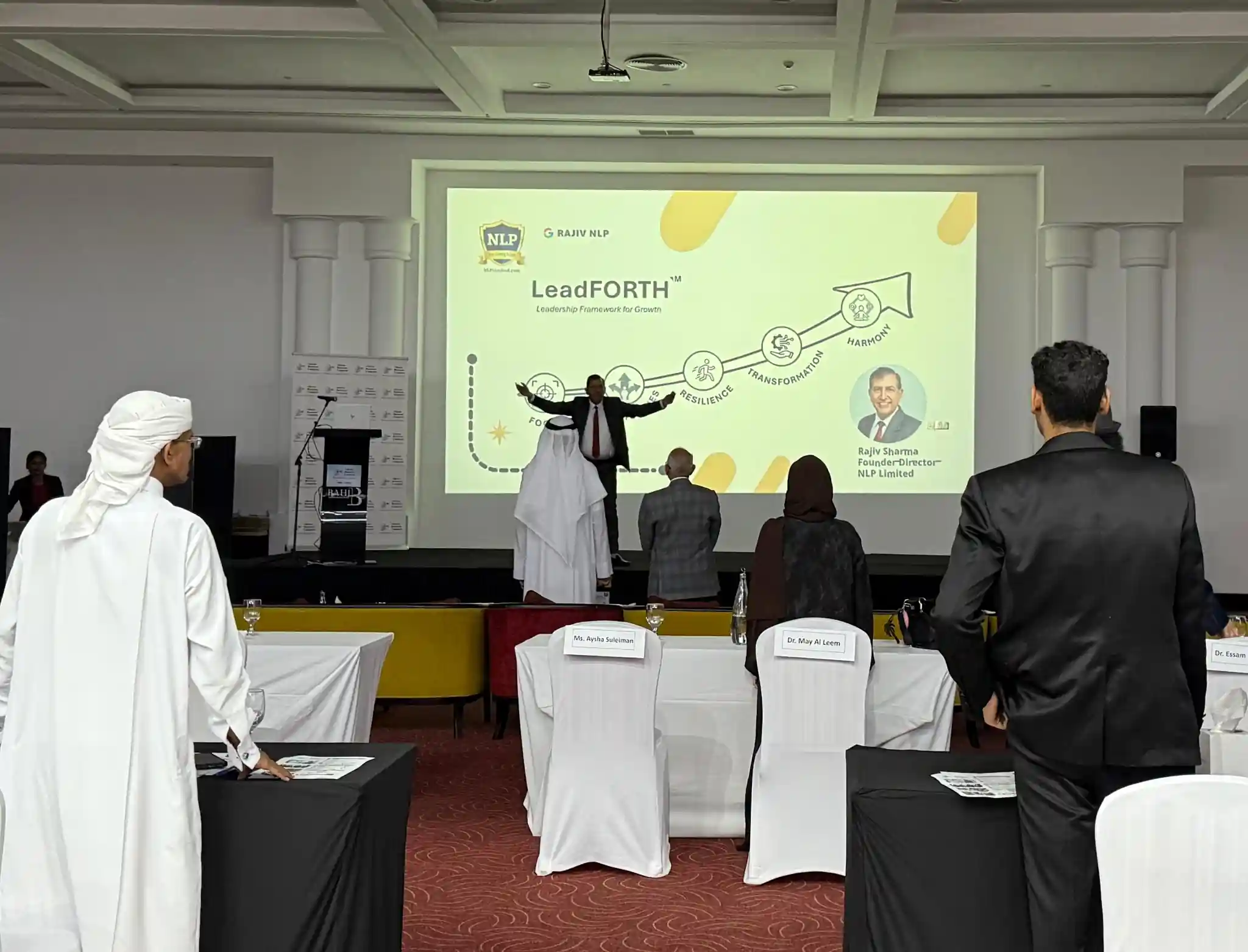
Leadership development with NLP Limited — the LeadFORTH programme
Emiratisation is the United Arab Emirates' national workforce policy to increase the number of UAE nationals working in the private sector. But it is more than a hiring policy: it is the practical expression of a national belief, held since the founding of the union, that the wealth of the nation lives in its citizens. It drives national development, economic diversification, and sustainable growth. Every organisation that develops Emirati leaders helps build that future — and the words of the UAE's leaders make the mission unmistakable.
The real asset of any nation is in its people.
You are the real wealth, not the three million barrels of oil.
Youth are the nation's greatest wealth.
حكومة الإمارات ووزارة الموارد البشرية والتوطين ونافس.">Emiratisation is overseen by the Ministry of Human Resources and Emiratisation (MoHRE) and supported by the Nafis initiative — an AED 24 billion federal programme. It set out to bring tens of thousands of Emirati citizens into private-sector jobs, a goal passed well ahead of schedule and since extended for the long term. The policy framework is clear and the timeframe is fixed. For the current rules, figures, and salary support, always check the official websites: UAE Government, MoHRE, and Nafis.
the cumulative target for Emiratisation of skilled jobs in private companies with 50+ employees, rising 2% each year.
Source: UAE Government (u.ae) · MoHRE.Emiratis employed through the Nafis programme, with 152,000 working across 32,000 establishments.
Source: Emirati Talent Competitiveness Council / MoHRE.rise in Emiratis in the private sector in just a few years — from 29,000 to more than 157,000.
Source: Khaleej Times / Nafis.committed to the Nafis programme to empower Emirati talent and incentivise private employers.
Source: Nafis / Emirati Talent Competitiveness Council.With the headline numbers achieved, the UAE has deliberately raised the bar. The Nafis Award now rewards qualitative, long-term Emirati employment rather than headcount alone. The new national priority is retention, capability, and Emirati leadership — not just citizens hired, but citizens who grow and stay.
This is exactly where most organisations are now exposed. A quota can be met in a quarter. A leader takes deliberate development — and a hire who is not developed often leaves, taking the target with them. More UAE nationals now see the private sector — alongside the public sector and semi-government roles — as a place for real career growth, and new graduates entering the workplace increasingly choose it.
The gap quotas leave open
A signed contract does not create a confident leader or a manager ready to develop one.
An Emirati hire who leaves resets your progress and your compliance position.
Targets are met by changed behaviour — on both sides — not by intention.
You cannot mandate confidence, mentorship, or belonging into existence. They are behaviours — and behaviours can be developed reliably and on a schedule. That is the entire discipline of Neuro-Linguistic Programming and the MARK Model®: turning the right mindset and skills into repeated action until they become the way people work. Used together, they let an organisation reach its Emiratisation objectives inside the timeframe, and hold them.
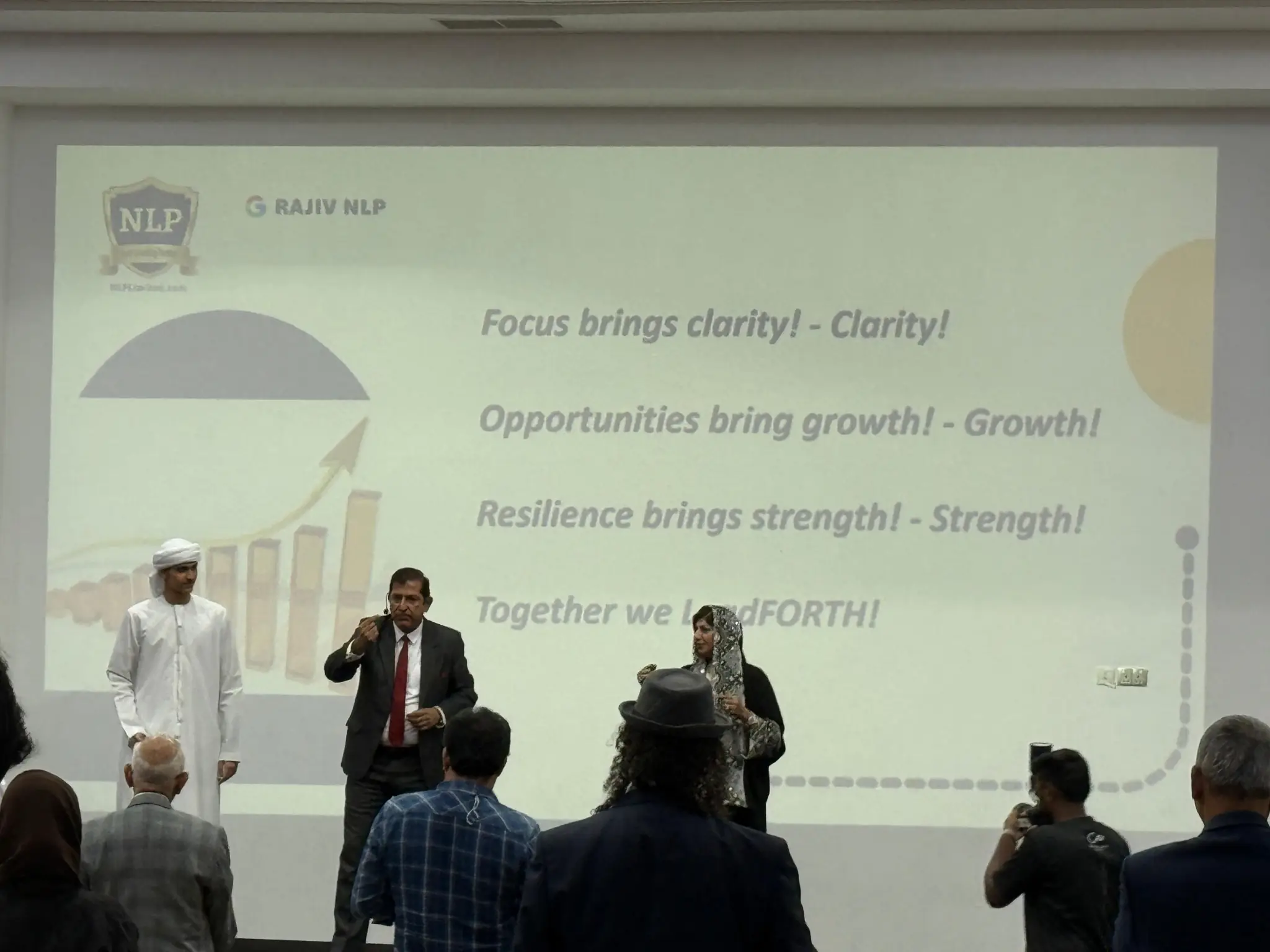
Leadership development in delivery — the LeadFORTH programme by NLP Limited
The MARK Model®, a framework registered by Rajiv Sharma, is the behaviour-change engine behind every programme. It maps directly onto the Emiratisation challenge: develop the right Mindset, define the right Action, drive it through deliberate Repetition, and ground it in real Knowledge.
Shift identity and belief: an Emirati professional who sees themselves as a private-sector leader, and a manager who sees Emiratisation as building capability, not meeting a quota.
Define the precise, observable behaviours a role demands — how a leader communicates, decides, coaches, and shows up — and put them into practice on the job.
Practise those behaviours deliberately until they become habit. Repetition is the lever that turns a workshop into a working leader within the timeframe the targets demand.
Equip people with the skills, frameworks, and sector understanding the role requires — so confidence rests on genuine competence, not bravado.
The flywheel: Knowledge informs Mindset, Mindset drives Action, Action repeated builds mastery, and mastery deepens Knowledge. Each turn makes the next easier — which is how leadership behaviour compounds quickly enough to meet a fixed national timeframe.
If MARK is the engine, Neuro-Linguistic Programming is the precision toolset. NLP is how a trainer or manager actually shifts a belief, builds trust across cultures, and helps an Emirati professional step into a leadership identity — in the moment, not in theory.
Managers learn to build trust quickly and read what an Emirati team member needs, removing the quiet friction that drives early turnover.
Reframe Emiratisation from a compliance cost into a capability advantage — and turn a new leader's self-doubt into earned confidence.
State-management techniques let emerging leaders stay clear and confident under pressure, in meetings, presentations, and hard conversations.
We model what your most effective Emirati leaders already do well, then teach those patterns explicitly so they can be reproduced at scale.
Each participant sets precise, motivating development goals — the difference between a course attended and a behaviour changed.
Clean questioning and persuasive language help new leaders influence, give feedback, and build commitment across a multicultural team.
A single workshop will not move a national target. A system will. We deliver Emiratisation leadership development across three connected pillars — build the content, build your trainers, then change behaviour — each powered by NLP and the MARK Model®.
We build the Emiratisation leadership curriculum your organisation actually needs — bilingual in Arabic and English, mapped to your roles and sector, and aligned to Nafis competencies and MoHRE expectations. Behaviour-change design and upskilling are built into every module from the start, so the material teaches the way people genuinely learn rather than simply informing them.
You own: a tailored Emiratisation leadership programme — modules, facilitator guides, and assessments — not a generic off-the-shelf course.
We certify your own people — including Emirati facilitators — to deliver the programme themselves, using NLP facilitation skill and the MARK delivery method. This is the multiplier: development capability stays inside your organisation, scales across cohort after cohort, and continues long after our engagement ends. It is also how you move at the pace a fixed timeframe demands, instead of depending on an external schedule.
You own: a certified internal faculty — Emirati role models who can train, coach, and reinforce the behaviours across the whole organisation.
The transformation itself: direct development of Emirati talent and the managers who lead them, using NLP and the MARK Model® to change the behaviours that decide whether a hire becomes a retained, promoted leader. We work on both sides of the relationship — the confidence, identity, and skill of the Emirati professional, and the inclusive, coaching behaviours of the manager who makes them want to stay.
You own: measurable behaviour change — Emirati leaders who perform and stay, and managers equipped to keep developing them.
The timeframe is not abstract. Companies with 50 or more employees must show a steady annual increase in skilled-job Emiratisation, building to the cumulative 10% target — with financial contributions for those who fall short. Here is how the pillars sequence against it.
Pillars One and Three move first — rapid content and direct behaviour-change training so new Emirati hires perform early and stay, securing the required annual increase.
Pillar Two scales delivery internally, so you hold the rate and clear the rising quality bar set by the Nafis Award, not just the headcount.
With Nafis extended for the long term, all three pillars sustain a pipeline of Emirati leaders — turning compliance into a lasting national and commercial advantage.
Done well, Emiratisation stops being a cost centre and becomes a source of leaders and a competitive national workforce. Organisations we work with build internal trainers, retain the Emirati talent they recruit, and turn jobs into real career growth and development opportunities — developing UAE nationals into managers, decision-makers, and drivers of innovation and entrepreneurship. That is the quality outcome the country is now asking for, and it supports national development and sustainable growth.
Behaviour change on both sides keeps people, protecting your target.
Your own certified Emirati trainers carry the development forward.
Confidence built on competence, ready for promotion and decision-making.
Proven across global organisations
professionals trained across 57 countries by Rajiv Sharma and NLP Limited.
customer satisfaction at Mercedes-Benz after NLP-based development.
NLP Limited client engagement.managers promoted within a year at American Express Asia.
NLP Limited client engagement.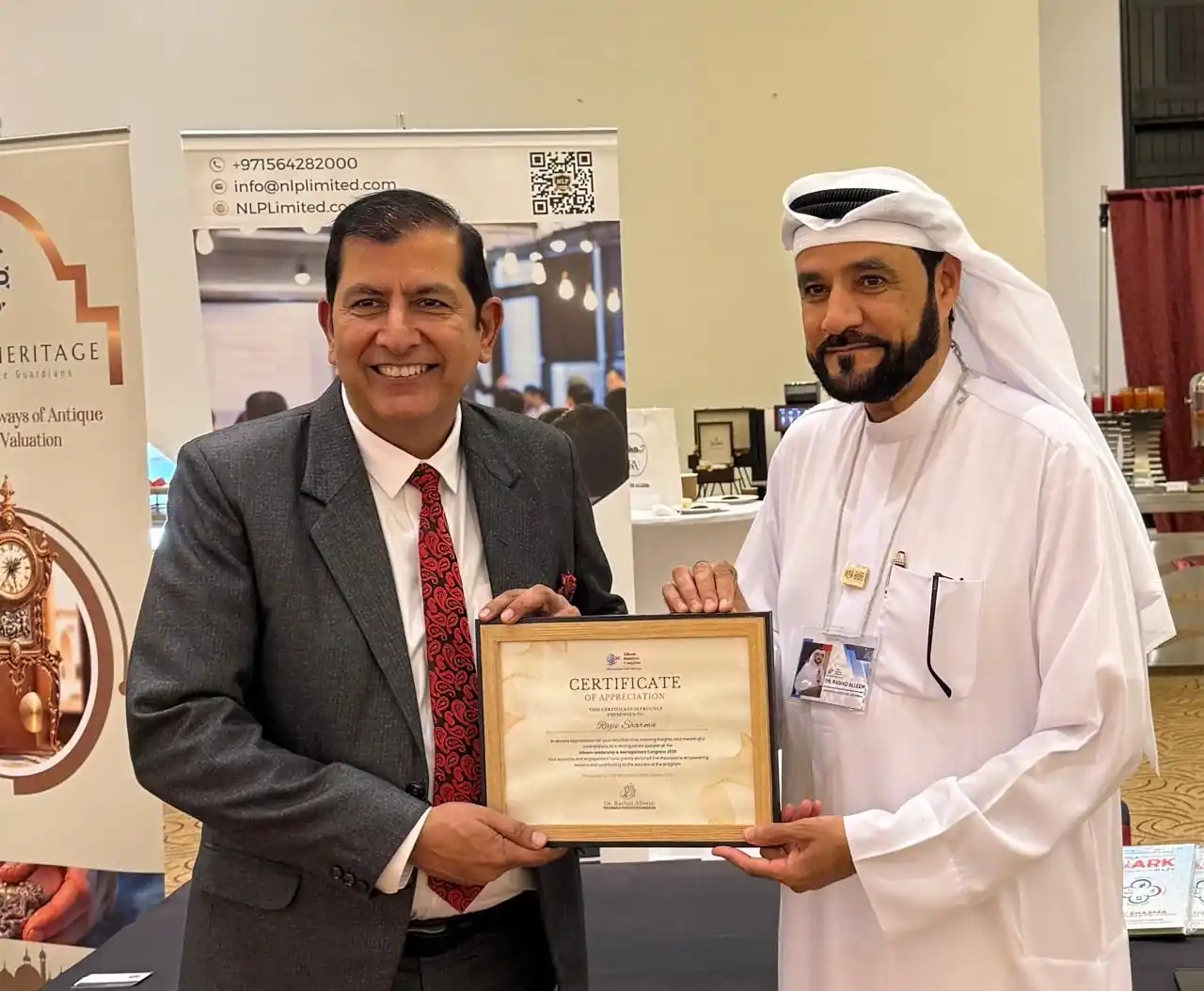
Leadership Development Award — recognising NLP Limited

RajivSharma.me.">NLP Master Trainer, ICF Professional Certified Coach (PCC), and founder of NLP Limited. Over 30+ years he has trained 850,000+ professionals across 57 countries, and is the creator of the MARK Model® (registered, Govt. of India). Certified under Dr Richard Bandler's Society of NLP and ranked #5 globally among NLP gurus by Global Gurus, he is endorsed by Marshall Goldsmith, John Mattone, and Brian Tracy. More at RajivSharma.me.
Brian Tracy calls Rajiv "one of the top professional trainers and speakers in the world today."— Brian Tracy
Start with a short conversation about your sector, your numbers, and your timeframe. We will map the three pillars to your position and show you how to get there.
Prefer email? info@NLPLimited.com · or book a call.
حكومة الإمارات (u.ae) ووزارة الموارد البشرية والتوطين ونافس.">Quotations are attributed to the named UAE leaders and drawn from publicly reported statements. Client outcome figures are from NLP Limited engagements. The MARK Model® is a registered framework of Rajiv Sharma (Govt. of India). This page describes leadership development services and is general guidance, not legal or compliance advice. For current Emiratisation rules, targets, salaries, and penalties, please always check the official websites: UAE Government (u.ae), Ministry of Human Resources and Emiratisation (MoHRE), and Nafis.
Sources: UAE Government Portal (u.ae), Employing Emiratis in the private sector; Ministry of Human Resources and Emiratisation (MoHRE); Emirati Talent Competitiveness Council / Nafis programme; PwC Middle East Emiratisation Survey; Khaleej Times (Nafis). Leader quotations: Sheikh Zayed bin Sultan Al Nahyan (The National); Sheikh Mohamed bin Zayed Al Nahyan (Khaleej Times); Sheikh Mohammed bin Rashid Al Maktoum (Gulf News).