The future-ready manager isn't the one who knows the most — that race is over, and AI won it. It's the one who learns fastest, leads people best, and judges most soundly. As automation takes the routine work, the human skills rise in value — and they can be built. This is how you become that future-ready leader.
Last updated: June 2026
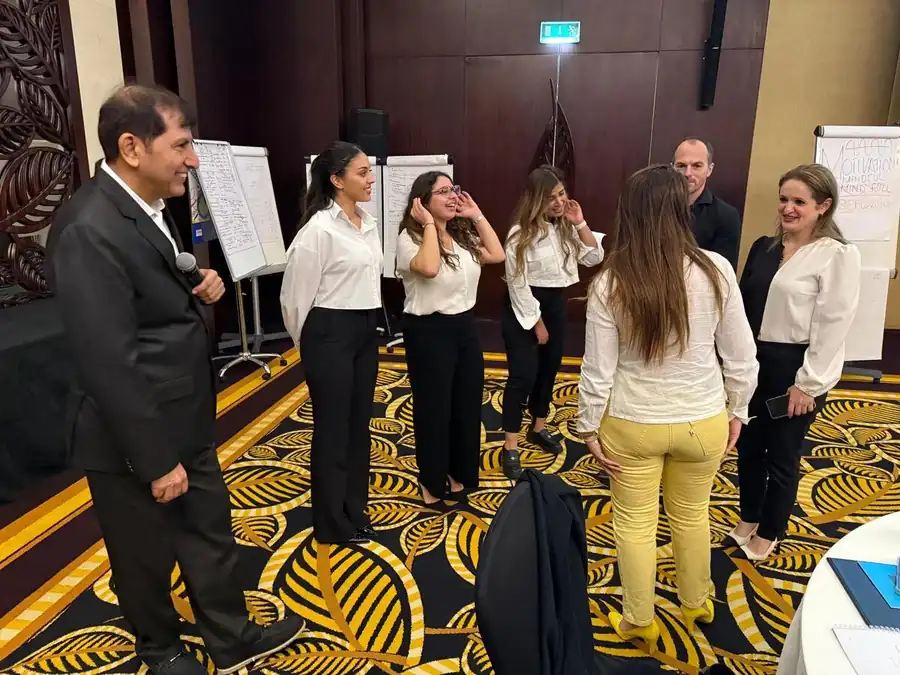
Future-ready leadership means staying valuable as the work changes — leading yourself, your people, and technology through continuous change rather than being overtaken by it. A future-ready manager doesn't rely on knowing the most; AI knows more. A future-ready leader builds the human capabilities automation can't copy and helps the team adapt to change. And a future-ready organization is one whose leaders, at every level, can pivot as the business landscape shifts. Future readiness, in short, is the capacity to keep performing as the future of work keeps moving.
For decades a manager's authority rested on knowing more than the team. AI ended that — it knows more than any of us, instantly.
Value has moved to a rate of learning, to leading human beings, and to judging wisely under uncertainty — the things AI can't do.
Automation and digital transformation are reshaping the business environment faster than most career playbooks assume. Skills that made someone effective five years ago no longer guarantee it, and emerging trends keep moving the target — so the only durable advantage is the ability to keep learning and stay ahead.
of workers' core skills are expected to change by 2030. Your edge is how fast you adapt, not what you know today.
WEF Future of Jobs Report 2025workers will need reskilling or upskilling by 2030, making continuous professional development a core leadership task.
WEF Future of Jobs Report 2025of the UAE's working-age population already uses AI — the world's highest adoption, so the change lands here first.
Microsoft AI Economy Institute, 2026Left unmet, this pace breeds a quiet fear of the unknown. Met deliberately, it's the moment for leaders and organizations to pull ahead and become future ready.
Future-readiness isn't one trait. It's the ability to lead three things well — yourself, your people, and AI. The defining leadership capabilities are being agile, resilient, inclusive, and able to think with strategic foresight. Each is trainable.
Versions differ across sources, but the 5 C's of management are commonly described as the foundations of effective leadership. They still hold — future-ready managers simply add adaptability, AI fluency, and strategic foresight on top of them.
Clear direction and expectations, so teams know what good looks like.
Two-way, precise, and consistent — the spine of effective leadership.
Working across different areas of the business, not in silos.
Owning outcomes and seeing change through to results.
Behaving predictably and fairly, which is how trust is built.
Definitions vary, but the 7 C's of leadership are often listed as the durable, human, purpose-driven traits below. They matter even more as automation grows, because they describe exactly what machines can't supply.
Integrity and ethics that earn trust.
Clear expression and genuine, active listening.
Taking the right stand under pressure.
Uniting diverse people behind a shared goal.
Reliable behaviour, words, and treatment of others.
Belief and purpose that inspire and motivate.
Continual learning that keeps capability current.
Eight habits of a future-ready manager. Tap each one that's honestly true of you — your readiness score updates live.
Most leaders and organizations know change is needed; what stops them is rarely a lack of information. It's these human and structural barriers.
Six moves that cultivate future readiness and equip you to guide your team through change — built through deliberate professional development and continuous improvement.
Block time to learn every month and model it openly. A visible learning habit is the clearest marker of a future-ready leader.
Use AI in your own work, set guardrails, and redeploy the time it saves into human work. See the AI-ready manager.
Develop your people's judgment instead of just assigning tasks. Coaching scales capability you don't have time to supply yourself.
Cultivate emotional intelligence, trust, inclusion, and communication — the rising, future-proof capabilities the data keeps pointing to.
Make the hard calls yourself, apply strategic foresight, and learn from outcomes. See human judgment in the AI era.
Adapt fast, manage your state under pressure, and guide your team — reinforced as habit through the MARK Model®.
As digital transformation reshapes the business environment, several emerging trends are redefining effective leadership and how leaders stay ahead of the curve.
Leaders use AI to handle routine work and reinvest the time into people and judgment.
Strategic foresight backed by data, so leaders can pivot and seize emerging opportunities.
Rising societal expectations make purpose and sustainability central to business strategy.
Diverse, inclusive teams that improve decisions, innovation, and customer experience.
Leading distributed teams with trust and clarity rather than presence and control.
Lifelong learning embedded into leadership roles to drive innovation and adapt to change.
Used well, digital technologies turn leadership development from an event into a daily habit — and integrate learning into the flow of real work.
The future-ready skills — learning agility, leading people, judgment, composure under pressure — share a common root: how a person processes experience and runs their own mind. That is precisely what Neuro-Linguistic Programming develops.
NLP helps leaders cultivate the adaptability to update fast, the rapport to lead diverse people, the perception and decision strategies behind sound judgment, and the self-mastery to stay clear under pressure. It integrates seamlessly into leadership development — less a set of facts to learn than a way of becoming someone who keeps adapting.
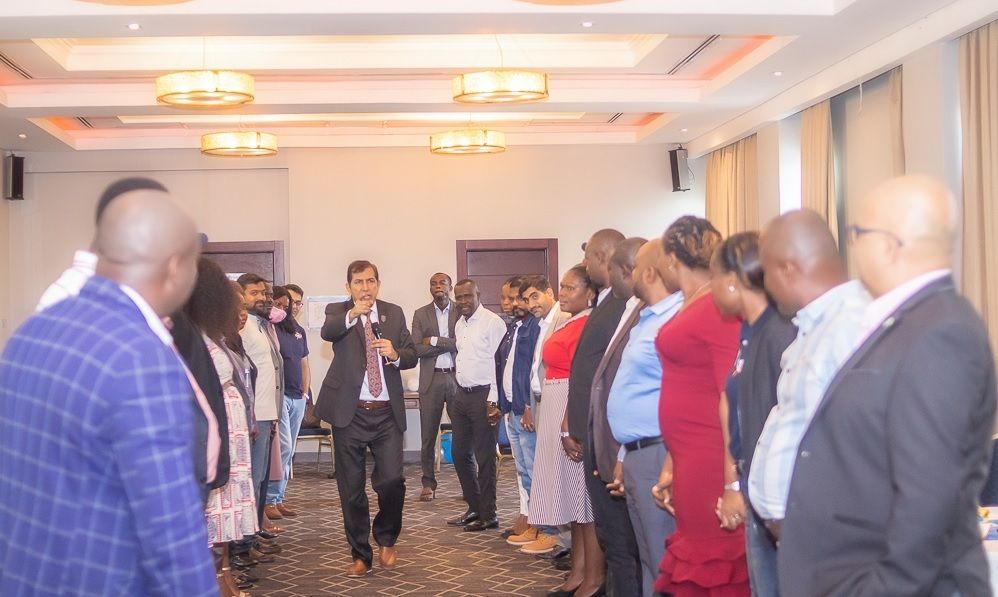
Over 30+ years, across 57 countries — the difference adaptive, human-led leadership makes to organizational success.
customer satisfaction at Mercedes-Benz, up from 72%, with annual targets achieved in eight months.
NLP Limited client engagementrevenue growth at Dangote Group, from $1B to $4B, through adaptive leadership across a multinational workforce.
NLP Limited client engagementmanagers promoted within the year at American Express Asia after leadership development.
NLP Limited client engagement 4.9· 4,400+ reviews

Rajiv Sharma is an NLP Master Trainer, ICF Professional Certified Coach (PCC), and founder of NLP Limited. He is the author of AI-ENABLE for Sales and creator of the AI-ENABLE® framework. Over 30+ years he has designed and delivered leadership development programs that prepare leaders across 57 countries — training 850,000+ professionals at organizations including Google, Microsoft, Shell, Mercedes-Benz, and American Express. Certified under Dr Richard Bandler's Society of NLP and ranked #5 globally among NLP gurus by Global Gurus (2026), he is endorsed by Marshall Goldsmith, John Mattone, and Brian Tracy. More at RajivSharma.me.
Brian Tracy calls Rajiv "one of the top professional trainers and speakers in the world today."— Brian Tracy
NLP Limited helps leaders and organizations build future readiness — adaptable, people-strong, AI-fluent, and sound in judgment — through leadership development programs in Dubai, Abu Dhabi, or virtually.
This guide draws on the WEF Future of Jobs Report 2025 and current AI-adoption research alongside NLP Limited's delivery experience. The 5 C's of management and 7 C's of leadership are widely cited frameworks for which definitions vary by source. AI-ENABLE® and the MARK Model® are frameworks of Rajiv Sharma / NLP Limited. Last updated June 2026.
Sources: World Economic Forum, Future of Jobs Report 2025; Microsoft AI Economy Institute (2026); UAE National Strategy for Artificial Intelligence 2031.