Leadership Development · Managing Multicultural Teams

Managing Multicultural Teams in the UAE

In a country of 200+ nationalities, leading across cultures isn't a nice-to-have — it's the job. This is the manager's guide to turning cultural difference into your team's biggest advantage, using the proven frameworks and the Neuro-Linguistic Programming method that builds cultural intelligence as a real, repeatable skill.

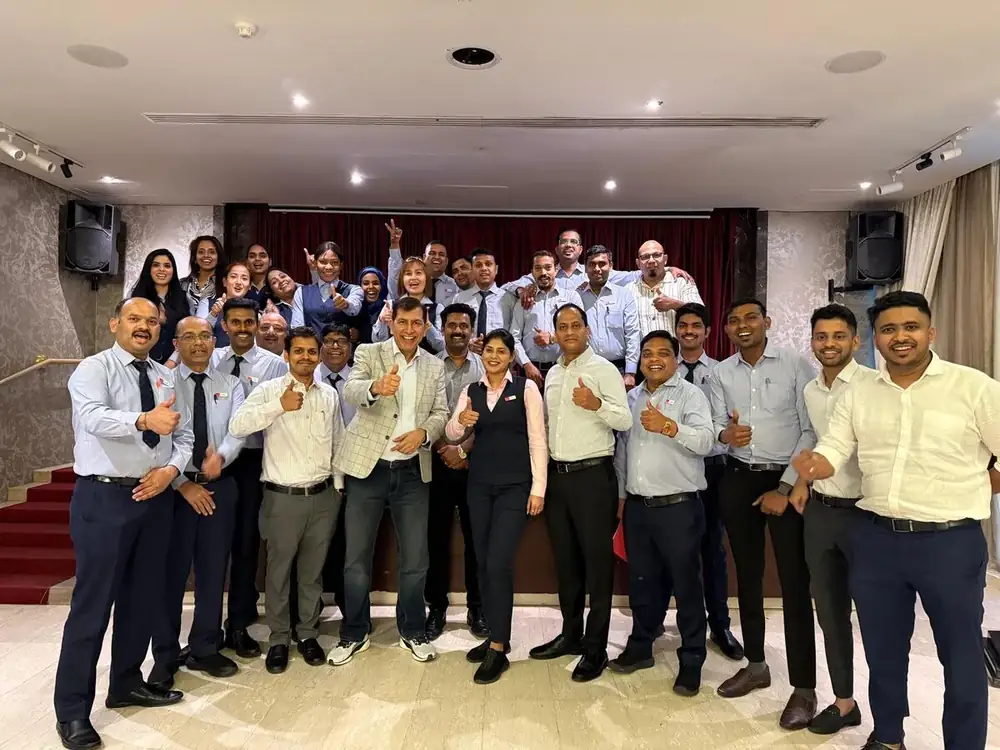
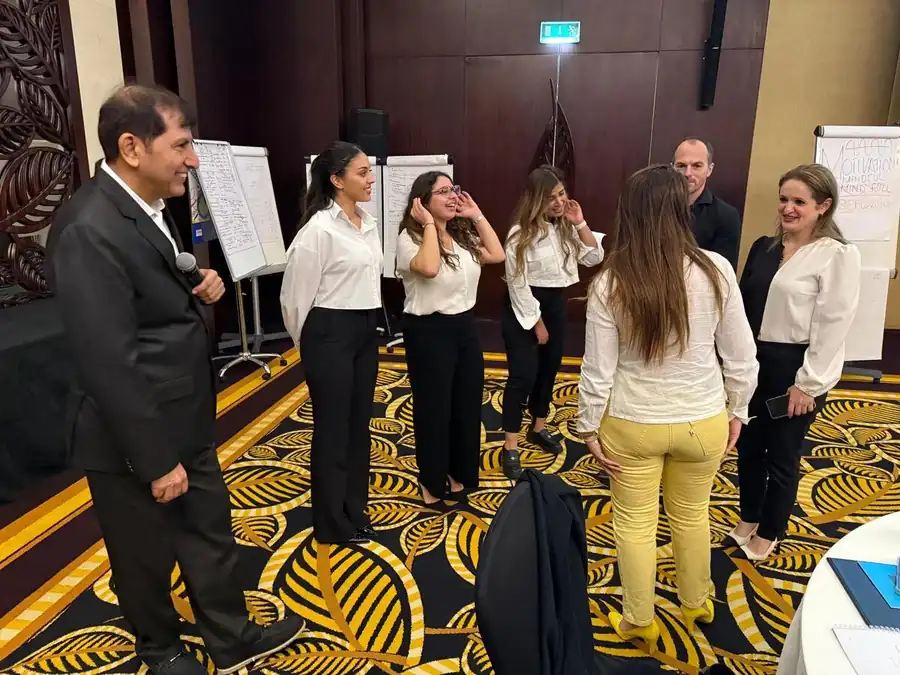
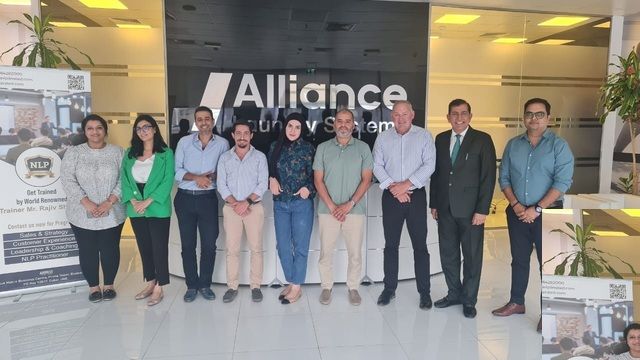
Rajiv Sharma leading a multicultural corporate team during a leadership programme in Dubai
A multicultural corporate team in a leadership programme · Dubai

Last updated: June 2026

As featured in

How do you manage a multicultural team in the UAE?

You manage a multicultural team in the UAE by leading people from 200+ nationalities so their differences become an advantage rather than a source of friction. It rests on four skills: reading how a message actually lands across cultures, adapting your communication and feedback style, setting shared norms everyone trusts, and intervening early when culture — not personality — causes conflict.

The managers who do this consistently treat cultural intelligence as a trained, repeatable skill, not a personality trait. At NLP Limited, that skill is built through Neuro-Linguistic Programming — which is what separates a manager who knows the theory from one who reads the room and adjusts in real time.

Why this matters here

The UAE is the hardest place on earth to get this right

Most leadership advice on diversity is written for a workplace that's mostly one culture with a few exceptions. The UAE is the opposite. Here, a single team can hold an Emirati national, a British director, a Filipino supervisor, an Indian engineer, an Egyptian accountant, and a South African designer — each carrying a different idea of what good communication, respect, and leadership look like. The manager who assumes everyone reads a situation the way they do will quietly lose people.

200+

nationalities work side by side in the UAE — one of the most culturally diverse workforces on the planet.

Source: UAE workforce composition
~90%

of the UAE workforce is expatriate, so multicultural management isn't a specialist skill here — it's daily reality.

Source: UAE labour-market data
39%

more likely the most ethnically diverse companies are to outperform financially — when that diversity is led well.

Source: McKinsey, "Diversity Matters Even More," 2023
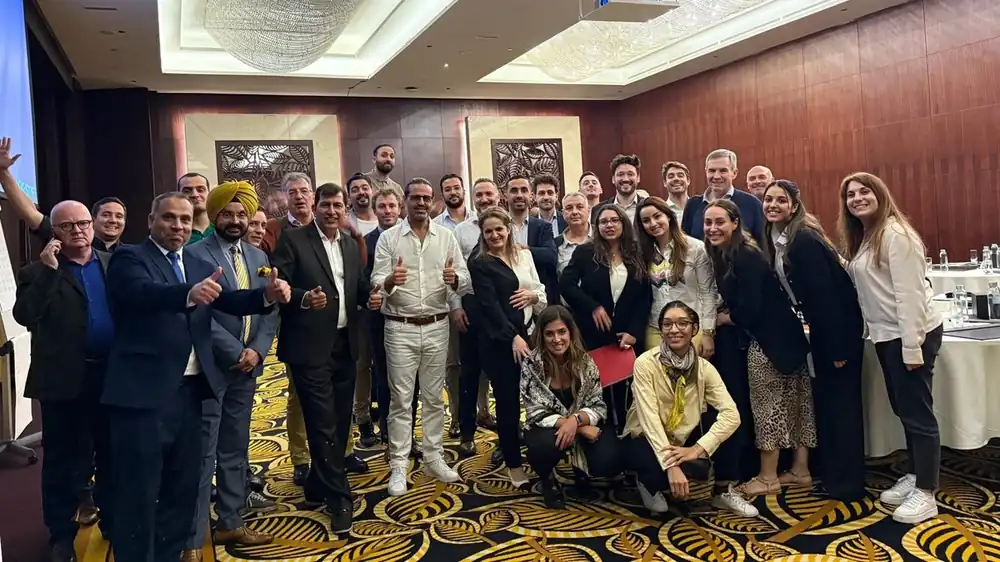
Dubai's multicultural business landscape, home to more than 200 nationalities
Dubai — a workplace of 200+ nationalities
The four fault lines

What actually goes wrong in multicultural teams

Decades of Harvard Business Review research found that friction in multicultural teams almost always traces back to four predictable fault lines — not to people being difficult. Name them, and most problems become solvable.

1
Direct vs indirect communicationHow feedback is given

A British manager's blunt feedback can read as disrespect to a Filipino team member, while an Emirati colleague may expect it face-to-face, never by email. Same words, opposite effect.

2
Attitudes to hierarchyPower distance

In some cultures, challenging a senior in a meeting is unthinkable; in others it's expected. A quiet "yes" may signal respect for rank, not genuine agreement.

3
Decision-making normsConsensus vs speed

Some cultures decide fast and adjust later; others build full consensus first. When those expectations meet unacknowledged, projects stall and trust erodes.

4
Accents, fluency & meaningThe shared-language trap

English is the common language, but fluency, idiom, and confidence vary widely. "Yes" can mean "I hear you," not "I agree" — and the gap surfaces only when work goes wrong.

Framework: the four challenges of multicultural teams, Harvard Business Review (Brett, Behfar & Kern).

The four proven strategies

How to resolve cross-cultural friction

When a cultural fault line opens up, experienced managers reach for one of four responses, from lightest touch to last resort.

1
Strategy 1 · Lightest touch

Adaptation: name the difference openly

Help the team see the cultural gap and work around it together. This works when people are willing to acknowledge their differences and adjust — the lowest-cost, highest-respect option, and the one to try first.

2
Strategy 2

Structural intervention: reshape the team

Change the setup rather than the people — adjust roles, form smaller mixed subgroups, or redesign how the team communicates so the friction has less room to occur. Useful when the team has fallen into cultural sub-groups.

3
Strategy 3

Managerial intervention: set the norms

Step in as the leader to set explicit ground rules and, when needed, make the call the team can't reach on its own. Best used early to establish norms, sparingly later so the team still owns its decisions.

4
Strategy 4 · Last resort

Exit: move someone on

When a member genuinely can't or won't work within the team, and the other three strategies have been tried, removing them protects the whole. The least common outcome — and the sign the earlier steps were skipped.

Framework: the four intervention strategies, Harvard Business Review (Brett, Behfar & Kern).

Our advantage

The skill underneath all of it: Neuro-Linguistic Programming

Every framework above tells you what to do. None of them builds the in-the-moment skill to actually do it — to feel a message landing wrong on an Emirati colleague and adjust your tone before the meeting sours. That skill is Neuro-Linguistic Programming, and it's why NLP Limited's managers lead multicultural teams differently. Read across the three letters, each one is a distinct advantage.

N
Neuro — read what's beneath the wordsSensory acuity & calibration

Most of any message travels in tone, expression, pace, and silence, not vocabulary. NLP trains a manager to notice how a message actually lands — on a German engineer, a Filipino supervisor, an Emirati director — and to adjust in real time, before a small misread costs you a good employee.

L
Linguistic — language that builds rapportPrecision & matching

The exact words you choose either build trust or quietly offend. NLP gives clean questioning that surfaces what someone really means, language that matches each person's style, and framing that lands across both direct and indirect cultures — so "tell me more" replaces an assumption that breaks the relationship.

P
Programming — make flexibility a habitBehaviour change that holds

Cultural sensitivity you have to consciously remember collapses under pressure. NLP installs it as a habit — rehearsing and reinforcing new responses until reading and flexing to culture becomes automatic. That permanence is engineered through the MARK Model®.

Rajiv Sharma teaching Neuro-Linguistic Programming tools for reading and adapting to people across cultures
NLP in practice — the skill behind cultural agility
Practical · NLP calibration

Calibration exercises: learn your team's communication baselines

Calibration is the NLP skill of learning each person's “normal” — their usual pace, tone, and signals — so you can read the moment they shift. On a diverse, multilingual team, it's how you stop misreading silence as agreement. Four exercises that build it.

1
The baseline conversation1:1 · low stakes

In a relaxed one-to-one, ask easy questions and notice each person's normal pace, eye contact, and how they signal genuine agreement versus simple acknowledgement. That's their baseline — so later shifts become readable signal, not guesswork.

2
The “say it back” roundMeetings

Ask people to paraphrase a decision in their own words. It surfaces who interprets directly versus indirectly and reveals fluency gaps without singling anyone out — so a polite “yes” never hides a misunderstanding.

3
Communication-style mappingWhole team

Have the team self-place on simple scales: direct↔indirect feedback, fast↔consensus decisions, formal↔informal. It builds a shared map and a shared language for difference, instead of leaving it unspoken and assumed.

4
The disagreement testOngoing

Learn how each person signals disagreement — some fall silent, some push back openly. Calibrating this is what stops a quiet “yes” being misread as consent: the single most expensive error on a multicultural team.

The concept

Cultural intelligence is learnable — here's the proof

Researchers at Harvard Business Review named the capability at the heart of all this: Cultural Intelligence (CQ) — the ability to read unfamiliar cultural cues and adapt your behaviour to them. Crucially, they found it is learnable, not a gift some managers are simply born with. CQ is the “what”. Neuro-Linguistic Programming is the “how” — the practical training method that turns the idea of cultural intelligence into a reflex a manager can actually use on a Tuesday morning, under deadline, with a frustrated team.

This is the difference between a one-day awareness workshop that fades by Friday and a genuine, lasting change in how someone leads. Awareness tells you cultures differ. NLP gives you the moment-to-moment skill to do something about it.

The practical playbook

The UAE multicultural management playbook

Eight practices that work in real UAE workplaces — offices, hospitality, retail, construction, banking, and logistics alike.

Schedule around what matters

Plan around prayer times, Ramadan, Eid, and Diwali. Framed as respect, not accommodation, it builds loyalty fast.

Praise in public, correct in private

Honour and face carry real weight here. A public correction that feels normal to a Western manager can permanently damage trust.

Make team norms explicit

Don't let collaboration rely on unspoken cultural assumptions. Agree openly how you'll give feedback, decide, and disagree.

Run meetings that draw everyone out

Use round-robins or written input so quieter, high-context voices are heard — not just the most confident English speakers.

Flex your feedback style

Direct and immediate for some; relationship-first and private for others. One feedback style for the whole team will fail half of it.

Keep language plain — and confirm it

Drop idiom and jargon. Don't assume "yes" means agreement; ask people to say back what they've understood.

Build Emirati–expat trust deliberately

Shared goals and visible fairness turn two groups into one team. See our guide on managing Emirati and expat teams.

Celebrate the calendar together

Mark UAE National Day and your team's many national days. Shared moments build the bridges that survive hard conversations.

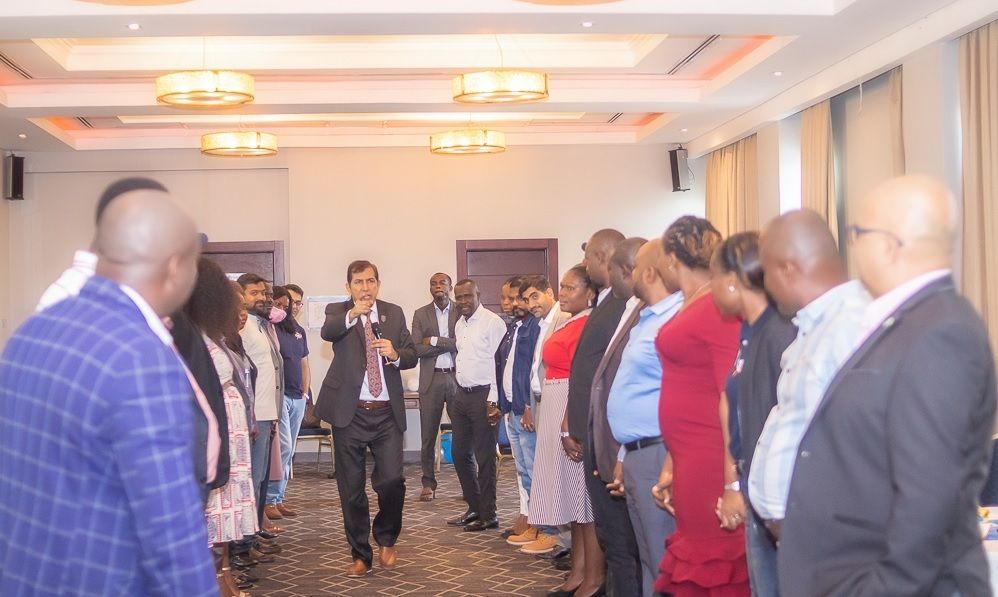
A multicultural team in an NLP Limited leadership and communication workshop
Building one team from many cultures — in the room
Comparison

What most managers do vs what actually works

SituationWhat works in UAE teamsWhat quietly fails
ConflictLook for the cultural cause firstBlame the person as “difficult”
FeedbackFlex to direct vs indirect stylesOne blunt style for everyone
MeetingsDraw out every culture deliberatelyLoudest, most fluent voice wins
NormsMake expectations explicitAssume everyone shares yours
The skillTrain cultural intelligence (NLP)Hope managers are “naturally sensitive”
Why this is credible

Built on 57 countries of practice, not theory

This isn't a literature review. Rajiv Sharma has personally trained and coached multicultural teams in 57 countries — from boardrooms in Dubai and Abu Dhabi to manufacturing floors in France with groups like Safran, and across India, Africa, and the United States. Every principle on this page has been tested in a real room, with real cultural friction, in front of real managers who had to lead differently the next morning.

That lived experience is the difference. Reading about high-context communication is useful; having stood in front of a team where it was breaking down, and knowing exactly how to repair it, is what NLP Limited brings.

Rajiv Sharma delivering corporate training in France
Corporate training · France
Rajiv Sharma leadership training with the Safran Group in France
Leadership programme · Safran Group, France
Proof it changes behaviour

What changes when teams are led across cultures well

A sample of outcomes from NLP Limited engagements with multicultural organisations.

18 / 24

managers promoted within the year at American Express Asia after a multicultural leadership development programme.

NLP Limited client engagement
96%

customer satisfaction at Mercedes-Benz, up from 72%, with annual targets achieved in eight months across diverse teams.

NLP Limited client engagement

revenue growth at Dangote Group, from $1B to $4B, through leadership across a multinational workforce.

NLP Limited client engagement

Want your managers leading multicultural teams like this?

NLP Limited builds the cultural-intelligence skill into your managers — in-house, in Dubai, Abu Dhabi, or virtually. Start with a conversation.

About the author
Rajiv Sharma, NLP Master Trainer and founder of NLP Limited

Rajiv Sharma

Rajiv Sharma is an NLP Master Trainer, ICF Professional Certified Coach (PCC), and founder of NLP Limited. Over 30+ years he has trained 850,000+ professionals across 57 countries, working with multicultural teams from Dubai to France, India, Africa, and the USA. Certified under Dr Richard Bandler's Society of NLP and ranked #5 globally among NLP gurus by Global Gurus (2026), he is endorsed by Marshall Goldsmith, John Mattone, and Brian Tracy. More at RajivSharma.me.

Brian Tracy calls Rajiv "one of the top professional trainers and speakers in the world today." — Brian Tracy

Rajiv Sharma in Dubai, UAE, where he trains leaders to manage multicultural teams
Rajiv Sharma · Dubai, UAE
Frequently asked questions

Managing multicultural teams: frequently asked questions

How do you manage a multicultural team in Dubai?

Lead each person according to how their culture reads communication, hierarchy, and feedback — not by one default style. Set explicit team norms, adapt your feedback (direct for some, relationship-first for others), and build the skill to notice in real time when a message is landing wrong. In the UAE, with 200+ nationalities on one team, this is the core of the job.

What are the biggest challenges of managing multicultural teams?

Harvard Business Review research points to four: direct versus indirect communication, differing attitudes to hierarchy and authority, conflicting decision-making norms, and gaps in language fluency and meaning. Most friction blamed on personality is actually one of these four cultural fault lines.

How do you give feedback across cultures without causing offence?

Match the delivery to the person. Some cultures expect direct, immediate feedback; others need it private and relationship-first, with honour preserved. Praise in public, correct in private, and confirm the message was received as intended. Our cross-cultural feedback guide goes deeper.

How do you handle conflict in a multicultural team?

Look for the cultural cause before assuming a personality clash. Then choose the lightest effective response: help the team adapt and name the difference, restructure how they work together, or step in to set norms. Removing someone is a last resort. See our conflict management guide.

What is cultural intelligence (CQ)?

Cultural intelligence is the learnable ability to read unfamiliar cultural cues and adapt your behaviour to them. Identified by Harvard Business Review researchers, it's the capability that lets a manager work effectively across cultures — and because it's a skill, it can be trained. Neuro-Linguistic Programming is the practical method for building it.

How does NLP help with managing multicultural teams?

Neuro-Linguistic Programming builds three things: the sensory acuity to notice how a message lands across cultures (Neuro), the precise language that builds rapport and surfaces real meaning (Linguistic), and the habit-formation that makes cultural flexibility automatic under pressure (Programming). It turns cultural awareness into an in-the-moment skill.

How do you build trust in a multicultural team?

Through visible fairness, shared goals, and consistency. Make norms explicit so no one is judged by unspoken rules, respect cultural and religious practices, and ensure quieter voices are heard. Trust grows fastest when people see their differences treated as respected, not merely tolerated.

How do you run inclusive meetings in a multicultural team?

Don't let the most fluent or most confident speaker dominate. Use round-robins, invite written input ahead of time, and explicitly ask quieter, high-context members for their view. Keep language plain and idiom-free, and confirm understanding rather than assuming a nod means agreement.

Can managing multicultural teams be trained?

Yes. Cultural intelligence is a learnable skill, not an innate trait. With the right method — NLP-based behaviour change reinforced over time — managers develop reliable, repeatable habits for reading and adapting to cultural difference. That's exactly what NLP Limited builds.

How do I give constructive feedback to someone from a high-context culture?

In high-context cultures, meaning lives in tone, relationship, and what's left unsaid, so blunt, direct feedback can land as a personal attack. Lead with the relationship, deliver it privately, soften the framing, and let the person keep face. Our cross-cultural feedback guide covers the exact language to use.

What calibration exercises help me understand a diverse, multilingual team?

Four work well: a low-stakes baseline conversation to learn each person's “normal,” a “say it back” round so understanding is confirmed not assumed, a communication-style mapping exercise on direct-versus-indirect and fast-versus-consensus scales, and a disagreement test so you learn how each culture signals “no.” Together they stop silence being misread as agreement.
Go deeper

Related guides for UAE managers

Work with NLP Limited

Turn cultural difference into your team's advantage

We build the cultural-intelligence skill into your managers through NLP — so they lead across 200+ nationalities with confidence, not guesswork.

The MARK Model® is a registered framework of Rajiv Sharma (Govt. of India). This guide draws on established cross-cultural management research alongside NLP Limited's own delivery experience. Last updated June 2026.

Sources: Brett, J., Behfar, K. & Kern, M., "Managing Multicultural Teams," Harvard Business Review; Earley, P. C. & Mosakowski, E., "Cultural Intelligence," Harvard Business Review; McKinsey & Company, "Diversity Matters Even More," 2023; UAE labour-market and workforce-composition data.

Your form has been successfully submitted.
Course will be emailed to you in 24 hours.