Flagship
Leadership Training Courses
Our flagship leadership training and development courses for individuals and organisations.
Browse the Courses
Dr. A.P.J. Abdul Kalam, whose full name was Avul Pakir Jainulabdeen Abdul Kalam, was the “Missile Man of India” and the “People’s President,” and one of the most loved figures the country has produced. He rose from a boat owner’s home in Rameswaram to lead India’s space and missile programmes, and then to the highest office in the land.
What makes him a rare study in leadership is the way he combined two models often treated as opposites: transformational leadership, which lifts people towards a bold vision, and servant leadership, which puts the people and the nation first. This article looks at both, and at what every leader can learn from him.

Few leaders have been so widely loved across every divide. A scientist by training and a teacher by calling, Kalam spent four decades building India’s defence and space capability, served a single term as President, and then went straight back to what he loved most, inspiring the young. He is remembered less for power than for the lives he lifted.
“You have to dream before your dreams can come true.”
Dr. A.P.J. Abdul KalamDr. A.P.J. Abdul Kalam led as both a transformational leader, raising people towards a bold vision of a developed India, and a servant leader, placing the nation and its students above himself. His scientific mind, his frugal, people first innovation, and his rule of taking the blame while giving the credit make him a model that modern leaders still study.
Leadership theory usually treats these as two different paths. Kalam walked both at once, which is exactly why he is studied so widely. Here is what each means, and how he embodied it.
A transformational leader raises people towards a shared vision through inspiration, example and meaning. Kalam did this by giving India and its youth a bold picture of a developed nation and the belief that they could build it.
A servant leader leads by serving, putting the growth and wellbeing of others first. Kalam lived this completely, placing the nation and its students ahead of position, wealth or personal credit.
The vision, humility and people first instinct that defined Kalam can be developed with the right guidance and practice. At NLP Limited we help leaders across India, the UAE and beyond grow exactly these capabilities.
Our flagship leadership training and development courses for individuals and organisations.
Browse the Courses
NLP gives leaders the communication and mindset skills to inspire teams and turn a clear vision into action.
Explore NLP TrainingAvul Pakir Jainulabdeen Abdul Kalam was born on 15 October 1931 in Rameswaram, Tamil Nadu, into a modest Tamil Muslim family. His father, Jainulabdeen, owned a boat, and the family lived simply. As a boy, Kalam helped support the household, and his curiosity about flight, sparked by watching birds, would shape the rest of his life.
He studied physics at St. Joseph’s College in Tiruchirappalli, then aeronautical engineering at the Madras Institute of Technology. Education was hard won, achieved through determination rather than privilege, and he never forgot it. That memory is one reason he spent so much of his later life giving young people the chances he had to fight for.
Kalam joined the Defence Research and Development Organisation in 1958 and later the Indian Space Research Organisation, where he was project director of SLV-III, the first satellite launch vehicle designed and built in India, which placed the Rohini satellite in orbit in 1980. His leadership of the Integrated Guided Missile Development Programme, which produced the Agni and Prithvi missiles, earned him the title Missile Man of India.
As Chief Scientific Adviser to the Prime Minister, he played a pivotal role in the 1998 Pokhran-II nuclear tests, and that same year he set out Technology Vision 2020, a roadmap to turn India into a developed nation. In 2002 he was elected the 11th President of India with support from both major parties, a rare consensus that reflected how widely he was trusted. After his term he returned to teaching and writing, and on 27 July 2015 he died as he had lived, delivering a lecture to students at IIM Shillong.
Great leaders never stop learning. Here is where you can take your own next step.
Our LeadFORTH programme for leadership and career growth, built for professionals in India.
Discover LeadFORTH
Executive leadership training and coaching for managers and senior teams in Dubai and Abu Dhabi.
Explore the UAE ProgrammeKalam’s great cause was a developed India, and he believed it would be built not by him but by the young. Through Technology Vision 2020 he gave the country a concrete target, and through books such as Wings of Fire and Ignited Minds he gave individuals the belief to chase it.
He travelled tirelessly to schools and colleges, telling students that a small aim is a crime and that they should dream big. He wanted to be remembered not as a President or a scientist, but as a teacher. That choice, to measure his life by the people he raised rather than the offices he held, sits at the very heart of servant leadership.
He painted a clear, hopeful picture of a developed India and made it feel possible. People worked harder because they could see what they were building.
He motivated through belief and encouragement rather than command, igniting ambition in scientists and students alike.
He worked alongside his teams, kept long hours and held himself to the highest standard, so his vision was backed by visible effort.
When SLV-III failed on its first flight in 1979, his mentor Satish Dhawan faced the press and took the blame. When it succeeded a year later, he let Kalam take the credit. Kalam called it the finest leadership lesson of his life and practised it ever after.
As President he kept an open door, answered students personally and lived simply. Position never changed how he treated people.
He left behind no wealth or property, only books and ideas. His reward was the growth of others, the truest measure of a servant leader.
Kalam never used the term Neuro Linguistic Programming, yet in his autobiography Wings of Fire he described his own thinking in words that map almost exactly onto its principles. For a scientist who solved some of India’s hardest problems, the mind was the first laboratory. Seen through an NLP lens, here is how he thought, innovated and solved problems.
You already have the resources you need. A core NLP idea that he lived. He wrote that within the mind are all the resources required for successful living, and he built belief in his teams before he built rockets.
Begin with the outcome. He fixed a vivid goal first, then worked back to strategy, the NLP habit of a well formed outcome that turned Technology Vision 2020 into a concrete national target.
Visualise before you build. He believed that what is clearly imagined can be made real, picturing success in detail before it happened, much as NLP uses mental rehearsal.
Reframe failure as data. When SLV-III failed in 1979 he treated it as a lesson, not a defeat, writing that adversity always presents opportunities for introspection. Reframing sits at the heart of NLP.
Model those who excel. He studied mentors such as Vikram Sarabhai and Satish Dhawan and absorbed how they led, the NLP practice of modelling people who already succeed.
Belief and expectation drive results. He named desire, belief and expectation as the forces behind achievement, the very inner states NLP works to strengthen.
Solve laterally, with what you have. He reframed costly problems into simple Indian solutions, a cardiac stent at a fraction of the price and polio calipers a tenth of the weight, turning constraints into breakthroughs.
Use language that lifts. He knew you cannot make a person creative by belittling them, so he chose words that built people up, an instinct any NLP practitioner shares.
His descriptions of his own thinking are drawn from Wings of Fire and Ignited Minds, verified against Wikiquote.
The LeadFORTH® framework, created by Rajiv Sharma, turns these qualities into five practical habits. Mapping Kalam’s leadership to it shows how vision and service become a model any leader can follow.
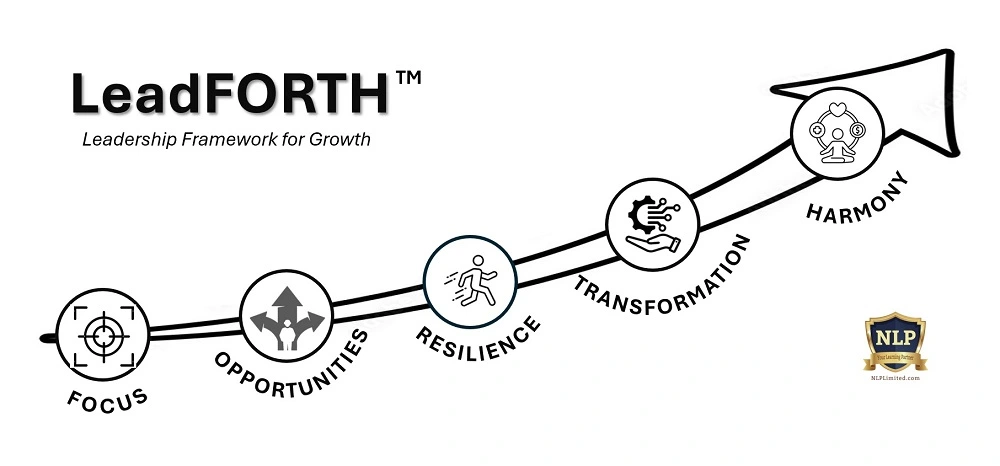
He held a steady focus on a few national missions, from indigenous launch vehicles to a developed India, and pursued them for decades.
He turned constraints into openings, from building India’s own technology to co-creating a low cost cardiac stent that made care affordable.
From early launch failures to humble beginnings, he treated every setback as a lesson and pressed on with quiet determination.
He transformed India’s scientific standing and, just as importantly, the self belief of a generation of young Indians.
A man of deep faith who read both the Quran and the Gita, he was a living symbol of unity who brought people together.
Dr. Kalam was a personal inspiration for Rajiv Sharma, founder of NLP Limited, in the creation of the MARK Model®. Kalam’s life made one thing clear: greatness is rarely about raw talent. It grows from a handful of habits anyone can build. The MARK Model captures four of them, and Kalam embodied each.
He began with belief and a bold dream, holding that the resources for success already lie within the mind. A strong, positive mindset came first.
He turned dreams into action, the very title of one of his books. To him a vision meant nothing until it was built.
Excellence, he taught, is a continuous process and not an accident. He kept going through failure after failure until the work succeeded.
A lifelong learner and teacher, he believed that knowledge, freely shared, is what lifts both a person and a nation.
Build the same vision and humility with focused coaching and future ready skills.
Grow as a leader with structured, internationally accredited coaching from a qualified coach.
Start ICF Coaching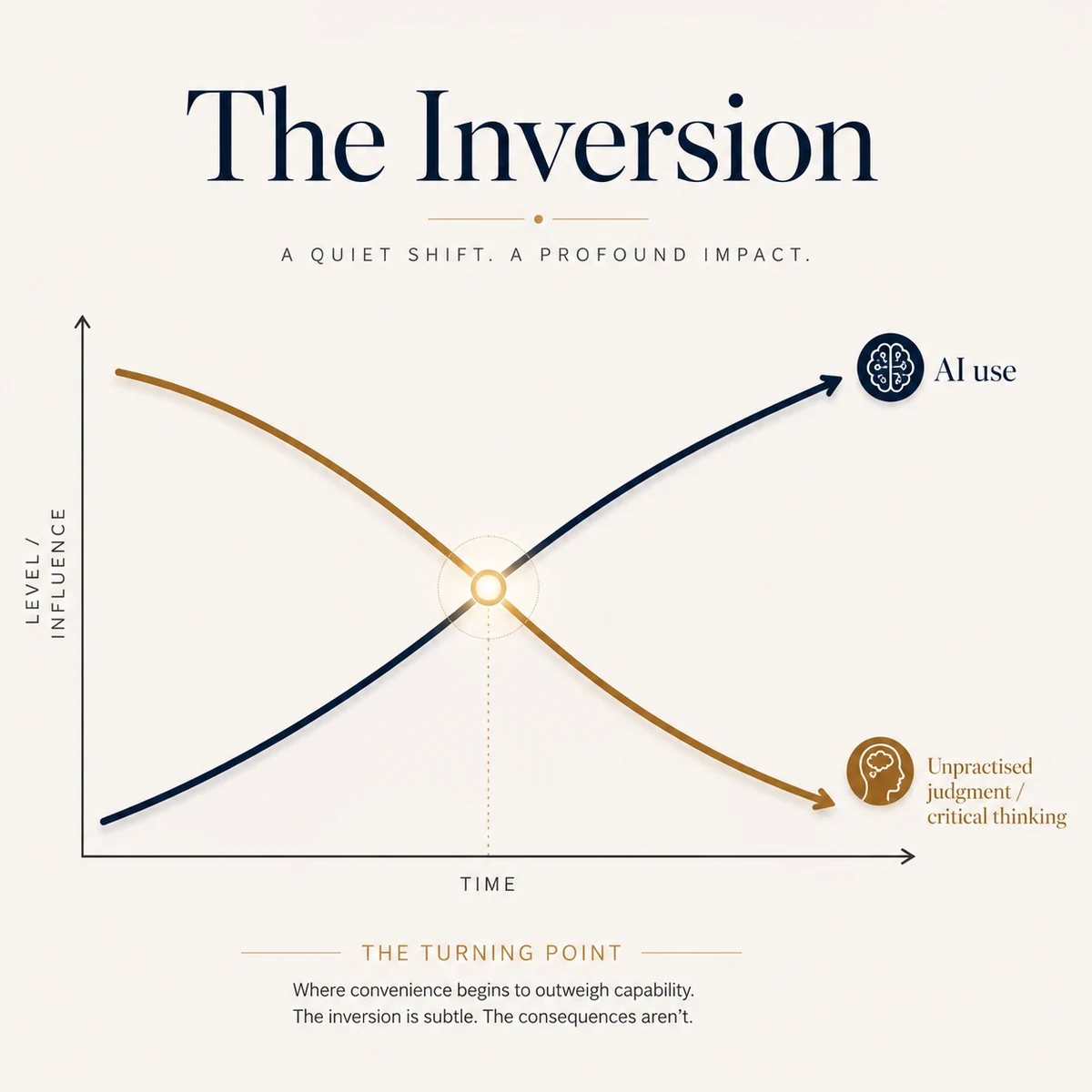
Lead your people and adopt new technology without losing sight of human responsibility.
Lead Well with AIKalam’s power came from a cause, not a title. Leaders who connect their team to a purpose larger than the quarter earn deeper commitment. We help leaders find and share that purpose through our leadership training and development courses.
His most quoted lesson is also the simplest. Owning failures and sharing success builds the kind of trust that makes teams brave. It is a habit we develop in our ICF accredited coaching.
He treated a student and a head of state with the same warmth. Approachable leaders hear the truth sooner and keep their people close, a focus of our leadership coaching in Dubai and Abu Dhabi.
He spent his last years teaching because he believed leaders are measured by the leaders they raise. Building people is the work that outlasts you, and it sits at the heart of the LeadFORTH programme in India.
His world was science and the state, but the habits beneath his success transfer straight to business. These are the lessons leaders most often take from him.
He gave India a concrete picture of a developed nation. A vivid, specific goal pulls a team forward faster than targets alone. We help leaders shape this in our leadership training courses.
His most quoted lesson builds the trust that lets teams take risks. Own the failures, share the wins. It is a habit we develop in our ICF accredited coaching.
He built a world class cardiac stent at a fraction of the cost and a launch vehicle made at home. Constraints, handled well, force the most creative solutions.
He invested in his people’s confidence first, knowing a team that believes will outperform a team that merely complies.
Every setback became a lesson, never an identity. Leaders who study failures calmly improve faster than those who hide them.
Through ideas like PURA he kept his focus on the people he served. Leaders who stay close to the customer and the front line make sharper decisions.
He spent his final years building the next generation. The leaders you raise outlast the results you post, the focus of our LeadFORTH programme.
He left office with his reputation and his simplicity intact. Trust, once earned and kept, is the most durable advantage a leader has.
“A big shot is a little shot who keeps on shooting, so keep trying.”
Dr. A.P.J. Abdul KalamWings of Fire“Thinking is the capital, enterprise is the way, hard work is the solution.”
Dr. A.P.J. Abdul KalamIgnited Minds“When learning is purposeful, creativity blossoms.”
Dr. A.P.J. Abdul KalamIgnited Minds“Man needs difficulties in life because they are necessary to enjoy the success.”
Dr. A.P.J. Abdul KalamYou Are Born to Blossom“We are all born with a divine fire in us.”
Dr. A.P.J. Abdul KalamWings of Fire“Let us sacrifice our today so that our children can have a better tomorrow.”
Dr. A.P.J. Abdul KalamAddress, 1998Wording verified against Wikiquote and attributed to the original books.
No part of Kalam’s life is more touching than his devotion to the young. He often said he wanted to be remembered as a teacher, and he meant it. He interacted with well over a million students, answered their letters and emails, and spent his final moments on a stage at IIM Shillong, mid sentence, doing the thing he loved most.
His birthday, 15 October, is observed as World Students’ Day in recognition of that devotion. His books for young readers, from Wings of Fire to Ignited Minds, remain among the most read motivational works in India.
The lesson for leaders is timeless. Kalam measured his life not by the offices he held but by the people he raised, the surest sign of a servant leader.
He played the veena and had a deep love of Carnatic music, a quiet, artistic side to the man of science.
A lifelong vegetarian who never married, he read both the Quran and the Bhagavad Gita and lived as a symbol of unity and simplicity.
He famously left behind no property or savings. His legacy was knowledge, values and the millions he inspired.
He died on 27 July 2015 while delivering a lecture to students, a life of service that continued to its final moment.
His full name was Avul Pakir Jainulabdeen Abdul Kalam. He is widely known as A.P.J. Abdul Kalam, the Missile Man of India, and as the People’s President.
Dr. A.P.J. Abdul Kalam (1931–2015) was an Indian aerospace scientist and the 11th President of India, serving from 2002 to 2007. Known as the Missile Man of India for his work on missile and launch vehicle technology, and as the People’s President for his humility and closeness to citizens, he spent his life in science, public service and teaching.
He was transformational because he lifted people towards a bold vision of a developed India through inspiration and example. He was a servant leader because he put the nation and its students ahead of personal power, wealth or credit. Combining both models, often seen as opposites, is what makes his leadership so widely studied.
The clearest example is the lesson he learned from his mentor Satish Dhawan. When the SLV-III launch failed in 1979, Dhawan took the blame publicly; when it succeeded a year later, he let Kalam take the credit. Kalam adopted this principle, take the blame and give the credit, as the heart of his own leadership.
He led SLV-III, India’s first indigenous satellite launch vehicle, and the Integrated Guided Missile Development Programme that produced the Agni and Prithvi missiles. He played a key role in the 1998 Pokhran-II nuclear tests, set out Technology Vision 2020, served as President of India, and inspired millions of students through his books and talks.
To lead with a vision bigger than themselves, take the blame and give the credit, stay humble and accessible, and invest in the next generation. These habits build trust, courage and lasting impact in any organisation.
His best known book is his autobiography Wings of Fire, written with Arun Tiwari. He also wrote India 2020, Ignited Minds, My Journey, Turning Points and others, many aimed at inspiring young readers to dream big and serve the nation.
He is called the Missile Man of India for his leading role in developing the country’s ballistic missile and launch vehicle technology. He earned the title People’s President for his warmth, simplicity and constant engagement with ordinary citizens and students during his time in office.
He died on 27 July 2015 of a cardiac arrest while delivering a lecture to students at the Indian Institute of Management, Shillong. He was 83. Fittingly, he was teaching the young when he passed, the role he most wanted to be remembered for.
In Wings of Fire he described a method strikingly close to modern Neuro Linguistic Programming: he began with a clear outcome, visualised success in detail, believed the resources he needed were already within reach, reframed failures as lessons, and modelled the mentors he admired. He paired this with frugal, lateral problem solving that turned constraints into breakthroughs, such as the low cost Kalam-Raju stent.
He never used the term Neuro Linguistic Programming, but his own account of his thinking maps almost exactly onto its principles: outcome thinking, visualisation, reframing, modelling excellence, and building empowering belief. Read through an NLP lens, his mind is a clear case study in these skills.
Lead with a vision people can picture, take the blame and give the credit, innovate under constraints, build belief before product, treat failure as feedback, stay close to the people you serve, grow your successors, and keep integrity non negotiable. These habits transfer directly from his world to business.
Among his most cited lines are “You have to dream before your dreams can come true,” “A big shot is a little shot who keeps on shooting,” and “Thinking is the capital, enterprise is the way, hard work is the solution.” These come from his books Wings of Fire and Ignited Minds and can be verified on Wikiquote.
The Kalam-Raju stent was a low cost coronary stent Kalam co-developed in 1998 that sharply cut the price of imported stents, widening access to heart care. PURA, Providing Urban Amenities in Rural Areas, was his model to bring physical, electronic, knowledge and economic connectivity to villages. Both show his frugal, people first innovation.
The MARK Model®, created by Rajiv Sharma of NLP Limited, stands for Mindset, Action, Repetition and Knowledge. Dr. Kalam was a key inspiration for it. His life showed that success comes from a strong mindset, decisive action, patient repetition and lifelong knowledge rather than talent alone.
His birthday, 15 October, is observed as World Students’ Day in honour of his lifelong devotion to education and to the young. He interacted with more than a million students and said he wished to be remembered above all as a teacher.
Whatever your market or function, we have a programme to match.
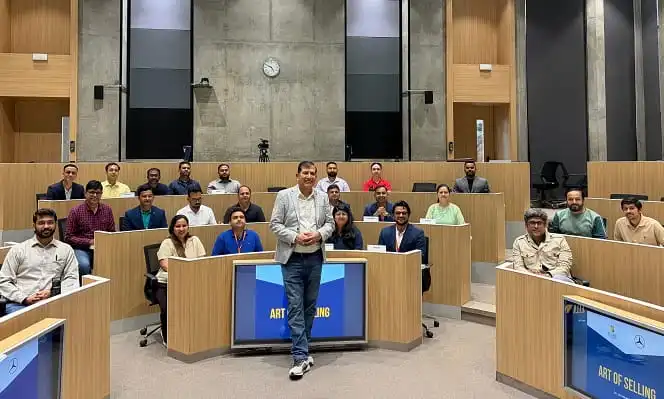
Sharpen the persuasion and negotiation skills that strong commercial leaders rely on.
Build Sales Skills
Programmes for leaders in New York, Los Angeles, Chicago, Houston and Washington DC.
View USA ProgrammesThis article draws on trusted, independently verifiable sources for the factual record of his life, work and leadership.
The blend of bold vision and genuine service that defined Dr. Kalam can be learned. We help leaders across India, the UAE and beyond build exactly that, using the LeadFORTH framework.