Flagship
Leadership Training Courses
Our flagship leadership training and development courses for individuals and organisations.
Browse the Courses
Narendra Modi is one of the most studied political communicators of his generation. From a small town in Gujarat, he rose to become the longest serving Chief Minister of the state and then the Prime Minister of India, winning a rare third consecutive term in 2024.
Whatever one makes of his politics, his command of communication, his work ethic and his ability to connect with very large audiences are widely analysed by leaders and students of leadership. This article looks at the qualities and the style behind that, maps them to recognised leadership models, and draws out what working leaders can apply.
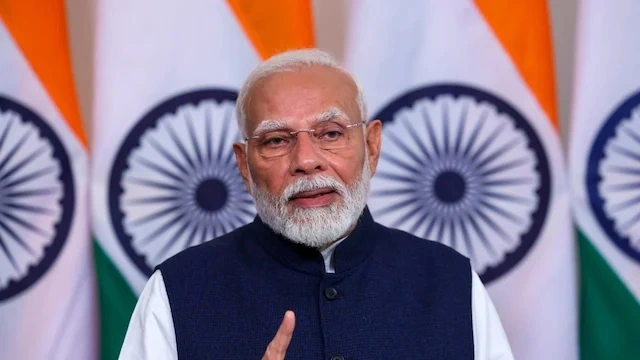
Modi leads the world’s most populous nation and its largest democracy. In 2024 he was sworn in for a third straight term, becoming only the second person after Jawaharlal Nehru to achieve that, this time at the head of a coalition government. His career is a long study in building support at scale and holding it across decades.
“Sabka Saath, Sabka Vikas, Sabka Vishwas.”
Narendra Modi, his stated governance motto, meaning together with all, development for all, trust of allModi has never called himself a practitioner, yet his communication is a living showcase of the patterns Neuro Linguistic Programming teaches. He reframes thinking, picks language that works for him and his message, and shifts with ease between world leaders, celebrities, sportspeople, soldiers, the common citizen and children. Seen through an NLP lens, a few techniques stand out.
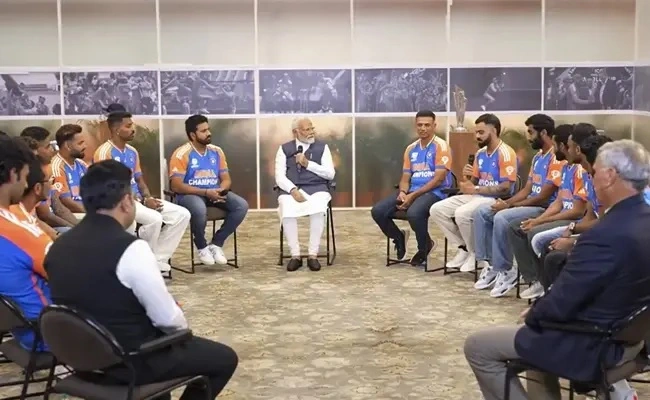
Reframing. He turns the ordinary into the meaningful, so a cleanliness drive becomes a matter of dignity and pride, and his tea seller past becomes a badge of honour. Researchers studying Mann Ki Baat describe this as turning directives into moral imperatives. (study)
Rapport and pacing. He meets each audience in their own language and references, then leads them gently to his point, whether they are farmers, students, athletes or heads of state.
Anchoring. Repeated slogans and the familiar chant of his name act as anchors that fire the same emotion every time the crowd hears them.
Sensory and metaphor rich language. He paints vivid, culturally resonant pictures, so abstract policy becomes something people can see and feel. (study)
Storytelling and future pacing. He tells short, relatable stories and paints a clear future, such as a developed India by 2047, and invites people to step into it with him.
Direct, intimate address. His “my dear countrymen” opening and direct to camera delivery create a one to one feeling even with millions listening at once. (study)
Calibrated body language. Deliberate gestures, steady eye contact, an upright posture and a signature personal style reinforce every word he speaks.
Positive, inclusive framing. Language such as Sabka Saath, Sabka Vikas frames everyone as included, building a single shared identity for people to rally behind.
The communication, discipline and connect with people that observers study in Modi are skills that can be developed with the right training and practice. At NLP Limited we help leaders across India, the UAE and beyond build exactly these capabilities.
Our flagship leadership training and development courses for individuals and organisations.
Browse the Courses
NLP gives leaders the communication and rapport skills behind clear messaging and a strong connect with any audience.
Explore NLP TrainingNarendra Damodardas Modi was born on 17 September 1950 in Vadnagar, a small town in the Mehsana district of present day Gujarat. He came from a family of modest means in the Other Backward Class Ghanchi community, the third of six children. As a boy he helped at his father’s tea stall at the Vadnagar railway station, an origin story he has returned to often.
His teachers remembered him as an average student but a keen debater with a flair for theatre, where he liked to play larger than life characters. He was introduced to the Rashtriya Swayamsevak Sangh as a child and, after a period of travel across northern and north eastern India in his late teens, became a full time worker for the organisation in 1971.
He continued his education alongside his political work, earning a degree in political science from Delhi University and later a master’s degree from Gujarat University. The combination of grassroots organising and self education shaped the disciplined, mission driven figure he became.
Modi spent years as an organiser before he ever held office. The RSS assigned him to the Bharatiya Janata Party in 1985, and he rose steadily through the party, becoming a national general secretary in 1998 and earning a reputation as a sharp strategist and organiser.
In 2001 he was appointed Chief Minister of Gujarat. He went on to win successive state elections and served until 2014, the longest tenure of any Gujarat Chief Minister. He built his national profile around a message of development and administration during these years.
In 2014 he led the BJP to a decisive national victory and became Prime Minister, repeating the win in 2019. In 2024 he secured a third consecutive term, this time leading the National Democratic Alliance as a coalition after his party fell short of a single party majority. Only Nehru had previously won three straight terms.
Strong leaders keep building their craft. Here is where you can take your own next step.
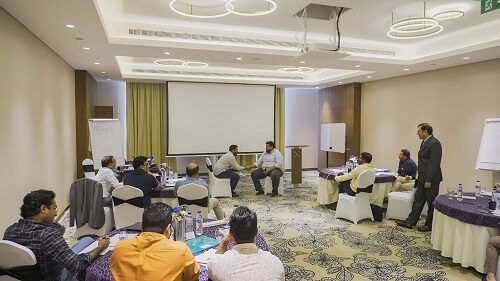
Our LeadFORTH programme for leadership and career growth, built for professionals in India.
Discover LeadFORTH
Executive leadership training and coaching for managers and senior teams in Dubai and Abu Dhabi.
Explore the UAE ProgrammeA recurring feature of Modi’s governance is the use of large, clearly named missions with public targets and deadlines. His stated philosophy of minimum government and maximum governance, and the motto of Sabka Saath, Sabka Vikas, gave his administration a simple message that was easy to repeat and rally around.
Flagship programmes such as Swachh Bharat for sanitation, Digital India, Make in India, Jan Dhan financial inclusion and PM Awas Yojana for housing followed the same pattern. His long range vision of Viksit Bharat, a developed India by 2047, gives the same approach a horizon that stretches well beyond any single term. Whatever the debate over individual results, the method itself, setting a visible national goal and mobilising the machinery of government behind it, is a clear leadership technique that managers can learn from.

Modi is, above all, a communicator. Through his monthly radio address Mann Ki Baat, large public rallies and a vast social media presence, he speaks directly to citizens in plain, repeatable language. Few leaders match his reach or his discipline in staying on message.
He is widely described as a relentless worker who keeps long hours and maintains a strict personal routine. That visible discipline became part of his leadership image and set a pace for those around him.
He is known for committing to large initiatives and pursuing them at national scale. This appetite for big, visible action is a defining feature of his leadership style, and a reason it is so closely studied.
He leads through story and symbol as much as policy. Simple slogans, clear themes and a consistent personal image give his message a unity that is easy for very large audiences to follow. Leaders who want to sharpen this can develop it through a structured leadership training and development programme.
He sets named missions with targets and keeps the focus on delivery and last mile reach. The style favours clear ownership and momentum over diffuse effort.
From humble beginnings to three national terms, his career has involved setbacks and reinvention. The 2024 result, which required him to lead a coalition, is the latest test of his ability to adapt while holding his core support.
Academics who study Modi tend to reach for more than one model, which is itself a sign of how composite his style is. The most common reading is transformational leadership, the idea that a leader raises followers towards a shared vision through influence, inspiration and meaning rather than transactional reward. His use of a big national vision, emotional appeals to pride and identity, and a strong personal example all fit that pattern.
Researchers have also applied the widely taught Kouzes and Posner model, the Five Practices of Exemplary Leadership. The fit is easy to see: he models the way with visible personal acts such as sweeping the streets at the launch of Swachh Bharat, inspires a shared vision with goals like a developed India by 2047, challenges the process with bold reforms, and works hard to encourage the heart through direct, emotional communication. A separate strand of writing reads him through servant leadership, citing his framing of himself as a Pradhan Sevak, or prime servant, rather than a ruler. The honest conclusion is that no single label captures him, and the most useful approach is to study the specific techniques rather than argue about the category.
Theory is useful, but leaders need something they can act on. The LeadFORTH® framework, created by Rajiv Sharma, turns the qualities above into five practical habits. Mapping Modi’s observable style to it shows how those traits translate into a repeatable model any leader can use.
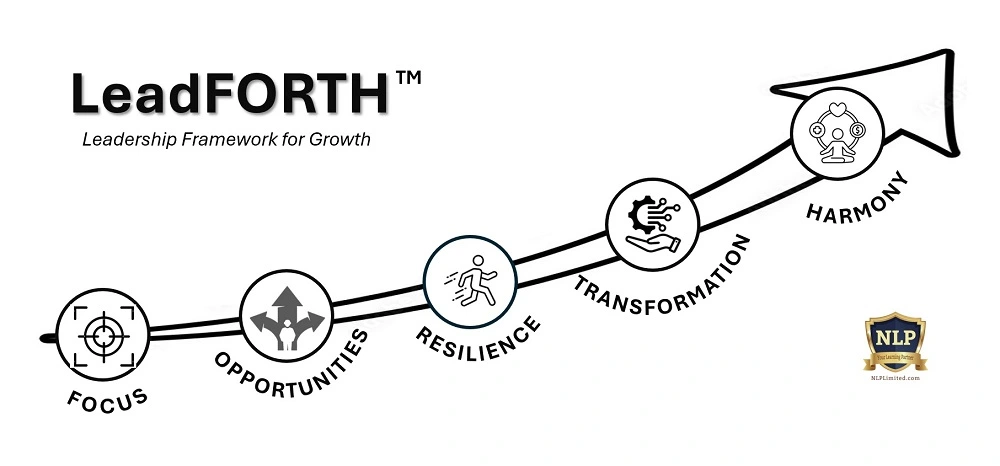
He runs government with named missions, targets and review systems, keeping attention on a few clear priorities and on last mile delivery.
He spots and seizes openings, from the digital payments wave and Make in India to hosting the G20 and building ties with the diaspora.
From a railway tea stall to three terms, and from setbacks to a coalition in 2024, his career is a study in absorbing pressure and adapting.
He frames his work as transformation rather than maintenance, anchored by a long horizon vision of a developed India by 2047.
His messaging leans on collective purpose and a shared national story, captured in the motto Sabka Saath, Sabka Vikas, as a way to align very large audiences.
Build the same clarity and presence with focused coaching and future ready skills.
Grow as a leader with structured, internationally accredited coaching from a qualified coach.
Start ICF Coaching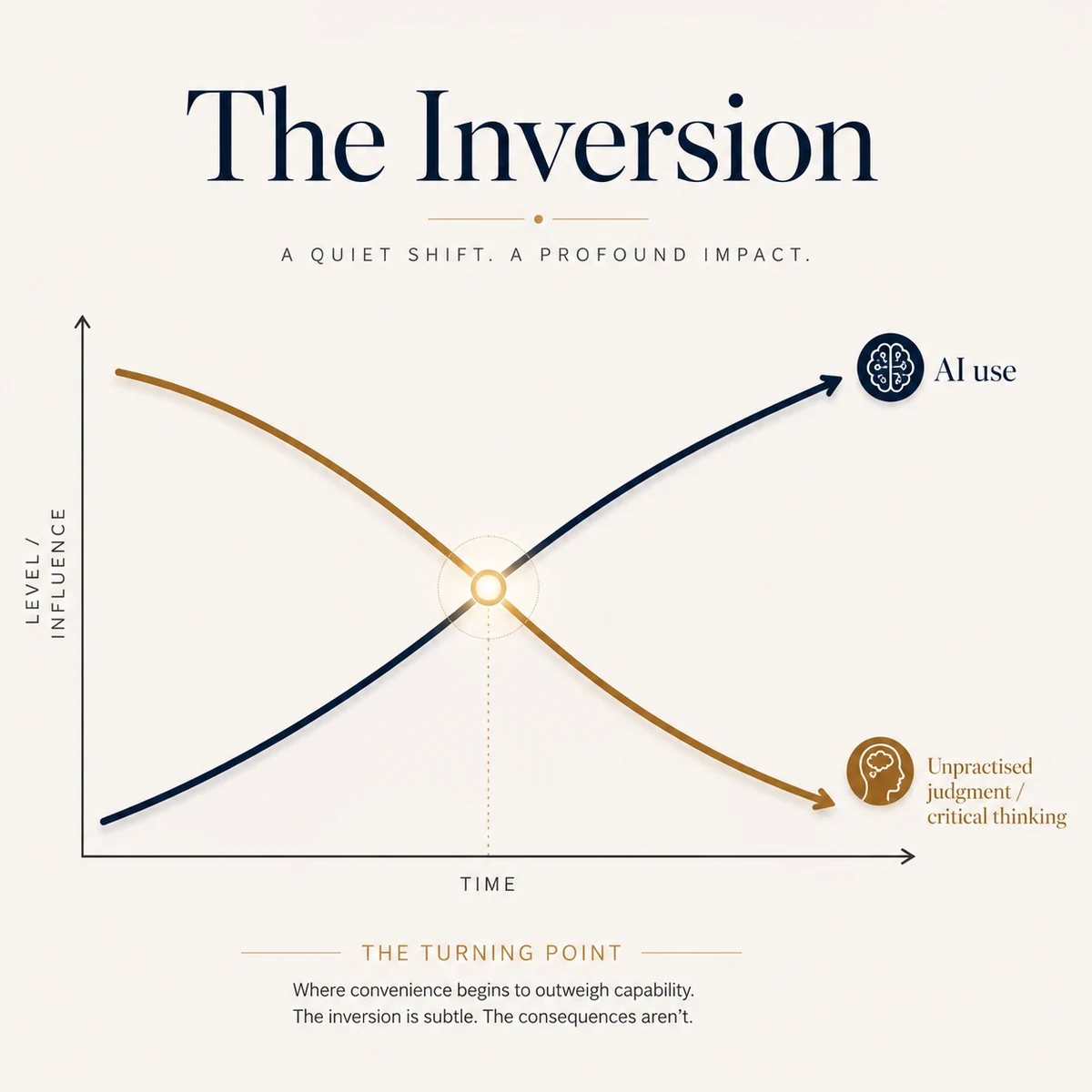
Lead your people and adopt new technology without losing sight of human responsibility.
Lead Well with AIModi’s reach comes from saying clear things often, in language people can repeat. For any leader, a simple message delivered consistently beats a complex one delivered occasionally. We help leaders build this through the LeadFORTH leadership and career growth programme in India.
His personal image and themes stay remarkably consistent over time, which makes him easy to recognise and follow. Leaders who define what they stand for, and hold to it, earn the same clarity. Our leadership training and coaching in Dubai and Abu Dhabi works on exactly this.
Named missions with public targets create focus and accountability. Setting a clear goal and mobilising people behind it is a skill at the heart of every leadership development course we run.
Big goals only hold up on a foundation of steady, daily discipline. That balance of vision and routine matters as much in business and in the age of new technology, which is why we built our work on responsible AI leadership.
Strip away the politics and a clear set of management lessons remains. These are the transferable habits business leaders most often take from how he operates.
He never outsources communication. Leaders who speak to their people directly, in plain language, build trust faster than those who hide behind layers.
His themes and image stay steady for years. A recognisable, reliable leadership identity is an asset that compounds over time.
Targets with names and deadlines focus an organisation. Vague aspirations do not move teams; a clear mission does.
He tracks delivery with dashboards and personal reviews, much like a chief executive. Momentum comes from inspecting what you expect.
From digital payments to artificial intelligence, he stays curious about new tools. Leaders who learn the next platform early keep their organisations relevant. This is the focus of our responsible AI leadership work.
His sustained engagement with students shows leaders the value of mentoring and building a pipeline of talent rather than hoarding the spotlight.
Long hours, a fixed routine and visible self care set the pace for those around him. Discipline at the top becomes culture below. We build this in our ICF accredited coaching.
From early setbacks to leading a coalition, he keeps adjusting while holding his core. Resilience and the willingness to adapt are what carry leaders through change.
Description is one thing, evidence is another. Here is what independent research and third party observers say about his leadership, presented as it stands, both supportive and critical.
A study in the Journal of Business and Management Studies built a conceptual framework of his leadership, grouping his traits into five factors: visionary and transformative, humanistic and value driven, decisive and result oriented, social influencer, and adaptable. He scored above 80 percent on 17 of the 19 traits measured, though empathy and transparency rated comparatively lower.
Peer reviewed work has analysed his governance through the Kouzes and Posner Five Practices of Exemplary Leadership, finding clear examples of modelling the way, inspiring a shared vision and encouraging the heart through direct communication.
Source: Journal of Practical and Professional Nursing (2025)
In 2024 he became only the second person after Nehru to win three consecutive terms, in an election with about 642 million voters. At the same time his party won 240 seats, down from 303 in 2019, so he leads a coalition for the first time, a reminder that even strong mandates are checked by voters.
His leadership is contested. Critics, including the political scientist Christophe Jaffrelot, have argued that India saw a weakening of democratic institutions over the decade, and several global indices lowered India’s democracy and press freedom rankings during his tenure. His supporters reject these readings.
His journey from helping at a railway station tea stall to leading the nation is central to how he is seen, and a reminder that origins need not limit ambition.
His early interest in theatre and debate shaped a lifelong feel for audience, timing and image that shows up in his public speaking.
He keeps a notably simple personal lifestyle and is a lifelong vegetarian, traits often cited as part of his disciplined public image.
He has received top civilian honours from several countries, including the UAE, France, Russia and Egypt, and India hosted the G20 summit under his chairmanship in 2023.
For all the focus on policy and power, one of the most consistent threads in Modi’s public life is his engagement with children and students. It is a side that softens his image and reveals a genuine interest in the next generation.
Since 2018 he has hosted Pariksha Pe Charcha, an annual interaction in which he speaks with school students, parents and teachers about handling exam stress. It has grown into one of the largest events of its kind, with millions of registrations and a Guinness World Record entry in 2025.
He also wrote Exam Warriors, a book of practical, encouraging advice to help young people face examinations without fear, and has championed initiatives such as Beti Bachao, Beti Padhao to promote the education of girls. Together these show a leader who chooses to spend real time mentoring the young, a habit any leader can learn from.
His personal habits feed directly into his leadership. The discipline of a daily routine, the calm of yoga and the focus of a lifelong reader all show up in how he carries himself in public.

A daily yoga practitioner, he begins his day with Surya Namaskar and championed the United Nations International Day of Yoga, observed worldwide on 21 June.
He writes poetry in Gujarati and has authored several books, blending a creative streak with his public role.
He took up photography in his early years, even holding exhibitions, and is a lifelong reader, a habit he credits for sharpening his thinking and speech.
A balanced view. Narendra Modi is a polarising figure, and assessments of his record differ sharply. Supporters point to economic and welfare gains, digital infrastructure and India’s rising global profile, while critics raise concerns about democratic norms, press freedom and the treatment of minorities. This article does not take a side on those debates. It focuses on the observable leadership and communication techniques that students of leadership study, which can be learned and applied regardless of one’s politics.
Narendra Modi is an Indian politician who has served as Prime Minister of India since 2014. He was Chief Minister of Gujarat from 2001 to 2014 and is a member of the Bharatiya Janata Party. Born on 17 September 1950 in Vadnagar, Gujarat, he won a third consecutive term as Prime Minister in 2024.
His style is narrative driven and goal oriented. He communicates directly and consistently to very large audiences, sets named national missions with public targets, and is known for discipline and a strong personal work ethic. Assessments of his overall record vary across the political spectrum.
He is most often described as a transformational leader, raising followers towards a shared vision through influence and inspiration. Scholars have also analysed him through the Kouzes and Posner Five Practices of Exemplary Leadership and through servant leadership, given his framing of himself as a prime servant. No single label captures him fully, which is why his specific techniques are more useful to study than the category.
Modi has never described himself as a Neuro Linguistic Programming practitioner, but his communication closely mirrors the patterns NLP teaches. Viewed through an NLP lens, he reframes ideas into positive, moral terms, builds rapport by matching each audience, anchors emotion through repeated slogans, uses vivid sensory language and storytelling, and reinforces his words with deliberate body language. These are learnable skills, not innate gifts.
The qualities most often studied are mass communication, discipline and work ethic, decisiveness at scale, resilience, and a strong connect with ordinary people. An academic study found he scored highly on most measured traits, while rating comparatively lower on empathy and transparency.
Using the LeadFORTH framework created by Rajiv Sharma, his style maps to Focus, mission mode with targets and reviews; Opportunities, seizing openings such as digital payments and the G20; Resilience, from a tea stall to three terms; Transformation, a long horizon vision of a developed India; and Harmony, messaging of collective purpose and national unity.
To communicate relentlessly and simply, build a consistent identity, set big and visible goals, and pair ambition with daily discipline. These techniques are observable and can be applied by leaders in any field.
He was born in 1950 in Vadnagar, Gujarat, into a family of modest means in the Other Backward Class Ghanchi community. As a boy he helped at his father’s tea stall at the railway station. He joined the Rashtriya Swayamsevak Sangh and later became a full time organiser, before entering electoral politics.
Three consecutive terms, after winning the 2014, 2019 and 2024 general elections. He is the second person after Jawaharlal Nehru to win three straight terms. In 2024 his party won 240 seats, down from 303 in 2019, so he leads a coalition for the first time.
Mann Ki Baat is Modi’s monthly radio address to the nation, which has run for more than a hundred episodes. It is a defining example of his leadership through direct communication, letting him speak to citizens without intermediaries and reinforce his themes month after month.
His government launched flagship missions including Swachh Bharat for sanitation, Digital India, Make in India, Jan Dhan financial inclusion and PM Awas Yojana for housing. He also championed the International Day of Yoga at the United Nations and set out the long range vision of Viksit Bharat, a developed India by 2047.
It is Modi’s stated governance motto, meaning together with all, development for all. He later expanded it to include Sabka Vishwas, the trust of all, and Sabka Prayas, the effort of all. It is an example of a simple, repeatable message used to unify a large audience.
He has received top civilian honours from several countries, including the Order of Zayed from the UAE, the Grand Cross of the Legion of Honour from France, and the Order of the Holy Apostle Andrew the First from Russia. He was also awarded the Seoul Peace Prize in 2018 and the Global Goalkeeper award by the Bill and Melinda Gates Foundation.
Critics, including some political scientists, argue that democratic institutions and press freedom weakened during his tenure, and raise concerns about the treatment of minorities. Several international indices lowered India’s rankings on these measures over the decade. His supporters dispute these readings and point to his electoral mandates and development record. This profile presents both views without taking a side.
Business leaders most often take eight lessons from him: own your message and communicate directly, build a consistent brand, set big and named goals, run on review and accountability, adopt technology early, invest in the next generation, lead with personal discipline, and stay resilient and adaptable. These are management habits, not political positions, and they transfer to any organisation.
Since 2018 he has hosted Pariksha Pe Charcha, an annual interaction with school students, parents and teachers about handling exam stress, which set a Guinness World Record for registrations in 2025. He also wrote Exam Warriors, a book to help students face exams without fear, and has backed initiatives such as Beti Bachao, Beti Padhao for the education of girls.
He is a daily yoga practitioner who championed the United Nations International Day of Yoga, writes poetry in Gujarati and has authored several books, took up photography in his early years, and is a lifelong reader. He keeps a simple, disciplined lifestyle and is a lifelong vegetarian.
Whatever your market or function, we have a programme to match.
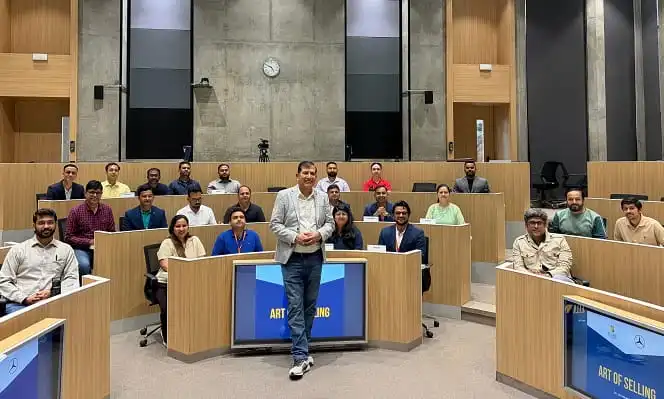
Sharpen the persuasion and negotiation skills that strong commercial leaders rely on.
Build Sales Skills
Programmes for leaders in New York, Los Angeles, Chicago, Houston and Washington DC.
View USA ProgrammesThis article draws on trusted, independently verifiable sources for the factual record of his life, career and leadership.
Whether you lead a team in India, the UAE or further afield, we will help you build the communication, discipline and presence that mark strong leaders, using the LeadFORTH framework.