Neuro-Linguistic Programming (NLP) is a practical approach to communication and personal change that studies the connection between how we think (neuro), the language we use (linguistic), and the patterns of behaviour we repeat (programming). By recognising and adjusting these patterns, NLP helps people communicate more effectively, overcome limiting habits, and achieve their goals with greater consistency.
In the short video above, NLP trainer and coach Rajiv Sharma explains the idea in plain language. The sections below go deeper into what the term means, how NLP actually works, and what it's commonly used for.
NLP stands for Neuro-Linguistic Programming, and each word describes one part of the model:
Neuro — the mind and how we process experience through our senses and thoughts. Linguistic — the language we use, both with others and in our own internal self-talk. Programming — the habitual patterns of thought and behaviour we run, often automatically. NLP is the study of how these three interact, and how changing one can change the others.
(Note: NLP can also refer to "Natural Language Processing", a field of computer science and AI. This page is about Neuro-Linguistic Programming, the human-development discipline.)
NLP works by making unconscious patterns conscious, then giving you tools to adjust them. A practitioner first identifies the specific thoughts, language and behaviours driving a result a person wants to change — for example, anxiety before public speaking or a habit of avoiding difficult conversations. From there, structured techniques are used to interrupt the old pattern and install a more useful one. Because the patterns are learned, NLP treats them as changeable rather than fixed.
People use NLP across both professional and personal contexts: improving communication and influence, building confidence and motivation, strengthening leadership and sales performance, managing emotions and stress, breaking unhelpful habits, and as a core toolkit in coaching and therapy. In organisations it's often applied to leadership development, customer experience, and behavioural change — areas where how people think and communicate directly affects results.
A few techniques you'll encounter early in any NLP training:
Reframing — deliberately shifting the meaning you attach to a situation to change how you respond to it. Anchoring — linking a desired emotional state to a specific trigger so you can access it on demand. Rapport — building trust and connection quickly through matching language and behaviour. Modelling — studying how a high performer thinks and acts, then reproducing that pattern. Well-formed outcomes — a structured way of defining goals so they're clear, specific and achievable.
NLP is used by leaders and managers, salespeople, coaches, therapists, teachers, and anyone who wants more control over their own communication and mindset. No prior background is needed to begin — foundational NLP training is designed for newcomers, while advanced certifications serve professionals who want to coach or train others.
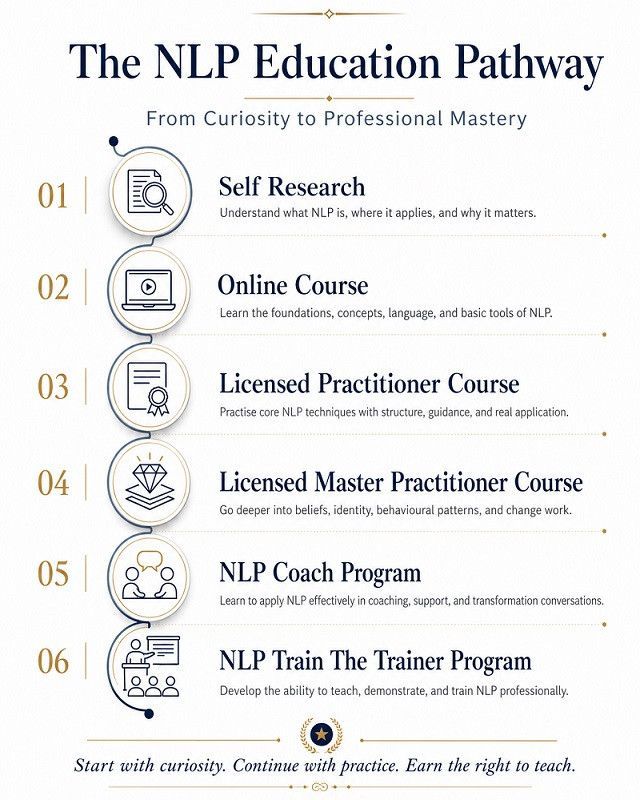
Rajiv Sharma is an NLP trainer and coach working with participants across India, Dubai and the wider UAE. The diagram below shows how the NLP learning journey is typically structured, from your first course through to advanced certification.
The best place to begin is the foundational NLP course. You can also explore more of Rajiv Sharma's work on his portfolio website, and find NLP training across India at NLP Training India.